



Blog
When Fuji NXTR work head pickup failures start affecting placement accuracy and line efficiency, fast and accurate troubleshooting becomes essential. This guide explains a practical Fuji NXTR work head pickup failure repair solution for semiconductor component production, helping manufacturers identify root causes, reduce downtime, and restore stable SMT performance. For companies seeking reliable equipment support, EXTENSION also provides SMT/THT assembly equipment, original spare parts, and complete PCB assembly line solutions.
Why does Fuji NXTR work head pickup failure matter so much in semiconductor component assembly?
In semiconductor component manufacturing, a pickup issue is rarely an isolated mechanical event. It directly affects placement offset, missing parts, nozzle vacuum stability, feeder synchronization, and final yield on high-mix SMT lines.
Fuji NXTR work head pickup failure repair becomes urgent when small packages, fine-pitch devices, and sensitive semiconductor components are involved. Even a short period of unstable pickup can increase rejects, rework, and line stoppages.
- Micro components such as chip resistors, ICs, and packaged semiconductor devices require consistent suction force and accurate Z-axis motion.
- A weak or inconsistent pickup action can trigger head retries, vision correction overload, and downstream mounting defects.
- In volume production, repeated pickup failures reduce OEE and make delivery commitments harder to achieve.
This is why an effective repair solution must combine symptom analysis, part inspection, spare part judgment, and process verification instead of replacing parts blindly.
How to identify the real causes of Fuji NXTR work head pickup failure?
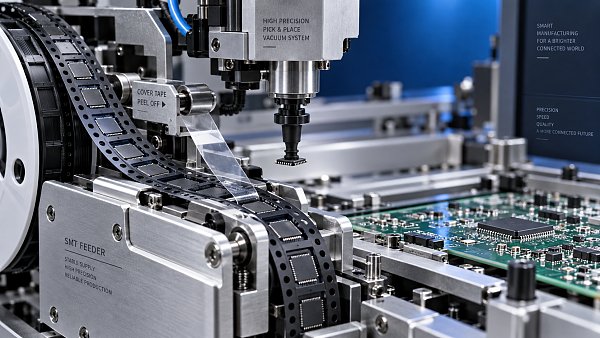
A practical Fuji NXTR work head pickup failure repair solution starts with root cause isolation. In semiconductor component lines, the same alarm may come from pneumatic loss, nozzle contamination, mechanical wear, or feeder-related inconsistency.
Before disassembly, maintenance teams should compare alarm timing, part family, nozzle type, and feeder lane behavior. This reduces unnecessary downtime and avoids replacing still-usable assemblies.
Typical failure sources to check first
- Vacuum path leakage caused by aging seals, cracked tubes, or blocked filters inside the work head circuit.
- Nozzle wear, contamination, or deformation that reduces contact quality with semiconductor components.
- Z-axis movement resistance, head calibration drift, or mechanical play affecting pickup height and contact timing.
- Feeder presentation problems, including part pitch variation, tape cover drag, or pocket deformation.
- Sensor feedback instability that causes false judgment of successful pickup or nozzle presence.
The table below helps maintenance and production teams narrow down the likely failure area before deciding whether the Fuji NXTR work head needs cleaning, calibration, spare part replacement, or deeper repair.
This kind of structured diagnosis is especially useful for semiconductor component factories where downtime cost is high and line recovery must be both fast and repeatable.
What is the recommended Fuji NXTR work head pickup failure repair process?
The best repair process is staged. It starts with non-invasive checks, moves to replacement of fast-wear items, and only then proceeds to deeper work head inspection. This approach protects production time and spare part budget.
Step-by-step repair workflow
- Confirm symptom history from machine logs, operator records, and yield reports. Check whether the pickup failure is random, nozzle-specific, product-specific, or feeder-specific.
- Inspect nozzle condition and clean the suction interface. Replace visibly worn nozzles before opening the work head.
- Check vacuum performance and air path integrity. Look for leaks, unstable vacuum values, contamination, and hardened sealing elements.
- Verify feeder presentation and pickup height settings. A healthy head cannot compensate for poor tape presentation or incorrect teaching values.
- If failure remains, inspect internal head mechanics, sensor response, and moving parts for wear, friction, or abnormal backlash.
- Reassemble, calibrate, and validate using representative semiconductor components rather than only a dry run.
For many factories, the biggest mistake is jumping directly to major repair without validating feeder behavior and nozzle condition first. That often extends downtime while the original cause remains in the line.
When should original spare parts be prioritized?
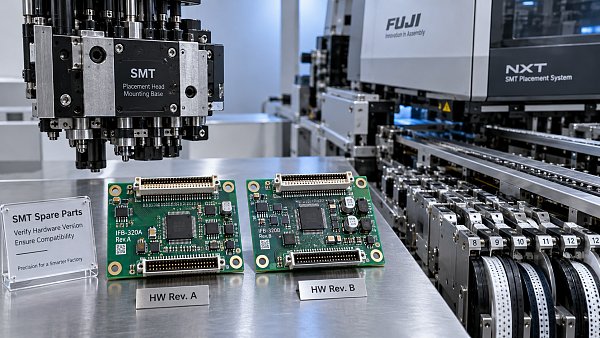
Original machine spare parts are usually the safer choice when the failed item directly affects vacuum sealing, motion accuracy, or sensor feedback. In semiconductor component placement, tolerance stacking can turn a minor dimensional variation into a recurring pickup loss.
EXTENSION supports customers that need original machine spare parts, helping them reduce compatibility risk and restore stable machine behavior with less trial and error.
Repair, replace, or optimize the line: which decision makes more sense?
Not every pickup problem should be solved the same way. Some cases need only maintenance consumables. Others point to deeper head wear, feeder aging, or even broader line bottlenecks affecting semiconductor component throughput.
The comparison below can support a faster decision between light repair, work head refurbishment, and broader equipment optimization.
For procurement and engineering teams, this comparison prevents over-repairing a local issue or underestimating a broader equipment reliability problem.
Which technical checkpoints are most important during troubleshooting?
A Fuji NXTR work head pickup failure repair solution should be validated against practical checkpoints. Semiconductor component assembly is sensitive to both machine condition and process stability, so maintenance cannot rely on one data point alone.
Priority checkpoints for engineers and buyers
- Vacuum consistency across repeated pickup cycles, not just one successful test cycle.
- Nozzle-to-component matching, especially for small, light, or electrostatically sensitive packages.
- Head motion smoothness and repeatability after repair, including vertical stroke response.
- Feeder presentation quality under actual production speed instead of low-speed maintenance mode only.
- Post-repair placement quality, because a restored pickup action still fails if placement offset rises.
These checkpoints also help procurement teams evaluate whether a supplier understands actual line conditions or is only offering generic parts support.
What should buyers check when sourcing repair support and spare parts?
In urgent production situations, buyers often focus only on price and delivery. That is understandable, but semiconductor component assembly usually demands more careful evaluation. A lower-cost part that causes repeat downtime can become the most expensive option.
The procurement table below is useful when comparing suppliers for Fuji NXTR work head pickup failure repair, spare parts support, or broader SMT/THT line assistance.
This is where EXTENSION brings practical value. The company focuses on SMT/THT assembly equipment, original machine spare parts, and complete PCB assembly line solutions, which is important when a pickup failure is part of a wider production issue.
How can manufacturers reduce future pickup failures after repair?
A successful Fuji NXTR work head pickup failure repair solution should not end with one restored shift. Prevention matters more than emergency response in semiconductor component production.
Preventive actions that usually pay back quickly
- Create nozzle cleaning and inspection intervals based on product mix instead of fixed calendar dates only.
- Track recurring pickup alarms by head, nozzle, feeder, and component family to identify patterns early.
- Review vacuum-related wear parts as planned maintenance items rather than waiting for full failure.
- Validate feeder condition regularly, especially for small semiconductor packages sensitive to presentation angle and pocket wear.
- Confirm calibration after any head intervention, spare part replacement, or mechanical shock event.
Factories handling diverse package sizes often gain the most from combining maintenance routines with process feedback from quality and production teams.
FAQ: practical questions about Fuji NXTR work head pickup failure repair
How do I know whether the problem is in the work head or the feeder?
Start by checking whether the failure follows the nozzle or stays with a specific feeder lane. If multiple nozzles fail only on one feeder, presentation is often the real issue. If one nozzle fails across several feeders, the head side is more likely.
Is it better to replace the whole head assembly immediately?
Not usually. For many semiconductor component lines, pickup failures are caused by nozzles, seals, filters, or calibration drift. Replacing the entire assembly too early increases cost and may not solve feeder or process-related causes.
What should be prepared before asking for repair or spare parts support?
Prepare the machine model, head position, alarm details, affected component types, nozzle type, production symptoms, and any recent maintenance history. Clear information helps suppliers judge whether you need parts, repair guidance, or broader line support.
Why do pickup failures often return after a short period?
The most common reason is that only the symptom was treated. If the root cause is feeder drag, unstable vacuum supply, internal wear, or poor part presentation, the same problem returns even after cleaning or replacing one visible part.
Why choose us for Fuji NXTR work head pickup failure support?
When semiconductor component production is under pressure, support must go beyond basic part supply. EXTENSION focuses on SMT/THT assembly equipment, original machine spare parts, and complete PCB assembly line solutions, which helps customers address both the direct failure and the surrounding process risk.
You can contact us for practical support on parameter confirmation, spare part matching, Fuji NXTR work head pickup failure repair planning, feeder-related troubleshooting, delivery cycle checks, and line-level solution discussion for SMT or THT production.
- Need help confirming whether the failure is caused by the work head, nozzle, feeder, or vacuum path? Share the symptom details for targeted evaluation.
- Need original spare parts or compatibility guidance? We can support part selection aligned with machine condition and production urgency.
- Need a broader PCB assembly line solution? We can discuss equipment scope, delivery timing, and practical support needs based on your application.
If your line is facing recurring pickup instability, now is the right time to review the failure pattern, secure the right spare parts, and build a repair path that restores stable placement without unnecessary cost.


GET A FREE QUOTE
Simply fill in the information to get a free quote! Our professional team customizes photovoltaic solutions for you, provides accurate quotes, and rejects hidden consumption!
