



Blog
A FUJI NXTR control box alarm can quickly disrupt SMT production and impact PCB assembly efficiency. For manufacturers and maintenance teams in the semiconductor components industry, knowing how to identify the alarm source, check key machine conditions, and restore stable operation is essential. In this guide, EXTENSION will explain practical troubleshooting ideas and service insights to help reduce downtime and keep your FUJI NXTR line running reliably.
What does a FUJI NXTR control box alarm usually mean in semiconductor components production?
In a high-mix SMT environment, a FUJI NXTR control box alarm is not just a simple machine warning. It often signals an interruption in communication, power stability, thermal condition, sensor feedback, or interlock status.
For semiconductor components assembly, even a short interruption can affect feeder accuracy, placement consistency, traceability flow, and downstream reflow scheduling. That is why alarm handling must be fast, disciplined, and based on real machine conditions.
Many production teams make the mistake of clearing the alarm first and investigating later. On a FUJI NXTR line, that can restart motion before the root cause is removed, increasing the risk of repeat stoppage or board loss.
- A control box alarm may originate from internal electrical status, not only from the placement head or feeder side.
- Alarm frequency matters. A one-time event often points to unstable utilities, while repeated alarms usually indicate aging parts, connection issues, or improper maintenance.
- In semiconductor components production, alarms should be reviewed together with ESD discipline, ambient temperature, line balancing, and spare parts condition.
Why the same alarm code may not mean the same production risk
The same FUJI NXTR control box alarm can have different operational impacts depending on the product mix. A line building fine-pitch semiconductor components, small passive devices, or sensitive IC packages may face higher quality risk than a line running less demanding assemblies.
This is why maintenance should evaluate not only the code itself, but also when it appears, which module is active, whether the alarm occurs during start-up or continuous production, and whether it coincides with recent part replacement.
How should you troubleshoot a FUJI NXTR control box alarm step by step?
A structured workflow reduces repair time and prevents incorrect intervention. For most maintenance teams, the best approach is to isolate the problem by sequence instead of replacing parts too early.
Recommended first-response checklist
- Record the exact FUJI NXTR control box alarm message, time, operating mode, and module status before reset. This helps identify whether the issue is random or repeatable.
- Check if the alarm appeared after power cycling, preventive maintenance, feeder exchange, software update, or line relocation. These events often change cable seating and grounding integrity.
- Inspect control box indicators, fan operation, connector locking, cabinet temperature, and visible dust accumulation. Heat and poor airflow are common but overlooked causes.
- Verify input power condition, grounding continuity, and voltage stability. Semiconductor components assembly lines are sensitive to utility variation, especially where multiple machines share the same supply branch.
- Review related alarm history. If similar warnings appeared in the days before the stop, the issue may have been developing gradually rather than happening suddenly.
- Only after basic checks should you move to module substitution, spare board confirmation, or deeper electrical measurement.
Key areas that deserve immediate attention
When handling a FUJI NXTR control box alarm, maintenance engineers usually focus on the alarm screen. In practice, the physical control environment often reveals the faster answer.
- Power units and distribution points: look for unstable supply, loose terminals, or signs of overheating.
- Cooling path: confirm fan function, filter cleanliness, and whether surrounding line layout restricts ventilation.
- Communication links: inspect harnesses, I/O connectors, and any cable recently disconnected during service.
- Internal boards and modules: check for contamination, oxidation, or intermittent seating issues.
- Environmental condition: confirm line-side temperature, humidity, and dust level, especially in facilities with mixed SMT and material storage zones.
Which conditions most often trigger a FUJI NXTR control box alarm?
Although exact root causes depend on the machine condition and alarm code, several patterns are seen repeatedly in SMT lines serving semiconductor components manufacturing.
The table below summarizes common trigger categories, what operators typically observe, and the first practical action to take before escalating the issue.
This comparison shows why alarm handling should begin with conditions around the control box, not with blind replacement. In many cases, utility quality, cooling, and connector integrity explain the FUJI NXTR control box alarm faster than deeper disassembly.
Why semiconductor components lines are especially sensitive
Semiconductor components often require tight placement tolerance, stable material flow, and careful ESD control. A stop-and-restart cycle can create feeder recovery issues, verification delays, and lot traceability interruptions.
If your FUJI NXTR control box alarm appears near changeover periods, the actual loss may include more than machine downtime. It can also affect first-pass yield, operator efficiency, and scheduled delivery commitments.
When should you repair, replace, or keep spare parts on hand?
A common challenge is deciding whether the FUJI NXTR control box alarm should be solved by onsite inspection, spare part replacement, or planned refurbishment. The wrong choice can increase cost without improving reliability.
Decision factors for maintenance and procurement teams
The best option depends on recurrence frequency, line criticality, available technical data, and spare availability. The following table helps teams evaluate practical choices.
For many factories, the most cost-effective approach is not buying every spare part. It is identifying which original machine spare parts are critical to line recovery and which can be ordered later without production exposure.
Spare strategy that supports PCB assembly continuity
- Keep records of repeated FUJI NXTR control box alarm events by date, shift, product family, and corrective action.
- Match critical spares to actual downtime risk, not only to catalog popularity.
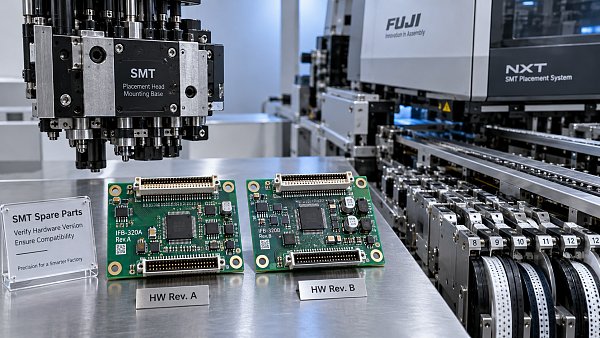
- Confirm part compatibility before ordering, especially if the line includes machines from different production periods.
- Coordinate spare planning with feeder maintenance, line balancing, and preventive service intervals.
What should buyers and engineers check before ordering support or parts?
When a FUJI NXTR control box alarm affects delivery schedules, many teams rush into procurement. Speed matters, but unclear information often leads to the wrong part, delayed shipment, or repeat troubleshooting.
Useful information to prepare before inquiry
- Machine model details and installed line configuration.
- Exact FUJI NXTR control box alarm text or code with photo evidence if available.
- History of recent maintenance, cleaning, relocation, or electrical work.
- Whether the issue is constant, intermittent, heat-related, or linked to start-up.
- Production urgency, required delivery window, and whether temporary substitution is acceptable.
This information helps support teams judge whether the problem is likely environmental, electrical, or part-related. It also improves quotation accuracy and shortens the path to action.
How EXTENSION supports faster and safer decisions
EXTENSION focuses on SMT/THT assembly equipment, original machine spare parts and complete PCB assembly line solutions. That matters when a control box alarm affects more than one station or when line output is already under pressure.
Instead of treating the alarm as an isolated part issue, a broader SMT service perspective helps review upstream and downstream influences such as power condition, feeder status, process bottlenecks, and recovery planning.
What maintenance mistakes often make a FUJI NXTR control box alarm worse?
Common errors on busy production floors
In semiconductor components manufacturing, downtime pressure is intense. That pressure can push teams to take shortcuts that fix the symptom but not the cause.
- Resetting the machine repeatedly without recording the original alarm condition.
- Replacing a board or module before checking cabinet temperature, fan status, and power quality.
- Ignoring grounding and ESD discipline during inspection of sensitive control sections.
- Ordering non-verified replacement parts that may not match the installed configuration.
- Treating a recurring FUJI NXTR control box alarm as random because the machine resumes temporarily after reset.
These mistakes often increase total downtime, especially when the line has to stop again during a priority semiconductor components order. A measured first diagnosis usually saves more time than a rushed replacement.
FAQ about FUJI NXTR control box alarm handling
Can I continue production after clearing a FUJI NXTR control box alarm once?
Only if the cause is confirmed and low risk. If the alarm came from unstable power, heat, or communication interruption, simple reset may allow temporary recovery but not stable operation. For semiconductor components lines, repeated short stops can create larger quality and schedule losses than one controlled repair window.
How do I know whether the alarm is caused by the environment or by an internal part?
Look at the pattern. If the FUJI NXTR control box alarm appears after long runtime, hot shifts, or facility power variation, environmental factors become more likely. If it repeats under the same machine condition even after utility checks, internal component aging becomes a stronger possibility.
What should be included in a spare parts inquiry for faster response?
Provide the machine model, alarm details, current symptoms, service history, and any visible part identification. Mention whether the line is down, whether temporary substitution is possible, and what delivery timeframe your PCB assembly plan requires.
Is it better to buy a replacement immediately or request technical review first?
If the line is critical and the symptom strongly indicates a known failing part, fast replacement may be justified. If the cause is unclear, technical review is usually the better commercial decision because it prevents wrong purchasing and repeated stoppage.
Why choose us when your FUJI NXTR control box alarm is affecting output?
When a FUJI NXTR control box alarm disrupts semiconductor components production, the real need is not only a part number. You need fast judgment, compatible spare support, and a practical path to restore line stability.
EXTENSION focuses on SMT/THT assembly equipment, original machine spare parts and complete PCB assembly line solutions. This allows us to support customers from several angles: alarm information review, spare part confirmation, PCB assembly line matching, and coordination with urgent delivery needs.
- Ask us to help confirm whether your FUJI NXTR control box alarm points to power, cooling, connector, or module risk.
- Consult us on original machine spare parts selection and compatibility checks before ordering.
- Request support for delivery lead time, urgent replacement planning, or line recovery coordination.
- Discuss broader SMT or THT line needs if recurring alarms are linked to aging equipment or line configuration issues.
If you are dealing with repeated machine stops, uncertain part selection, or tight shipment commitments, contact EXTENSION with your machine details, alarm code, photos, and required timeline. We can help you review the situation more efficiently and move toward a practical solution.


GET A FREE QUOTE
Simply fill in the information to get a free quote! Our professional team customizes photovoltaic solutions for you, provides accurate quotes, and rejects hidden consumption!
