



Blog
Inspection Process for Pre-owned SMT Placement Machines
Buying a pre-owned SMT placement machine can lower capital expenditure substantially, but only when inspection confirms that performance, supportability, and production fit remain intact.
The most important question is not whether a machine powers on, but whether it can place your actual components accurately, repeatedly, and economically.
A disciplined inspection process for pre-owned SMT placement machines protects buyers from hidden repair costs, incompatible feeders, unavailable software, and expensive production interruptions after installation.
For PCB assembly managers, engineers, and purchasing teams, the inspection should connect technical condition directly to throughput, yield, maintenance risk, and expected return on investment.
SMT MALLS supports these decisions with SMT and THT assembly equipment, original machine spare parts, and complete PCB assembly line solutions for practical manufacturing needs.
Start with Production Requirements Before Inspecting Equipment
Inspection should begin with your production requirements, because a mechanically sound placement machine can still be a poor investment when its capability does not match demand.
Document expected board dimensions, annual production volume, typical lot sizes, required component range, target cycle time, and the number of product changeovers per shift.
Review whether your products include fine-pitch ICs, BGAs, QFNs, 0201 or 01005 chips, connectors, odd-form components, shields, or other specialized packages.
These details determine the necessary placement accuracy, vision configuration, feeder types, nozzle selection, board handling capacity, and software functions required for stable production.
Buyers should also identify peak-demand conditions rather than relying only on average output, since equipment bottlenecks normally appear during urgent delivery schedules or demand spikes.
Ask for the machine’s rated placement speed, but assess its realistic output using your component mix, feeder setup time, board complexity, and required inspection activities.
A high-speed chip shooter may deliver limited value when your production is dominated by fine-pitch placements, frequent changeovers, or low-volume, high-mix assemblies.
Define acceptable downtime, local service capability, spare-parts availability, and budget for refurbishment before visiting a seller, because those factors shape the acceptable equipment condition.
Verify Machine Identity, Age, and Ownership History
Confirm the exact manufacturer, model, serial number, manufacturing date, configuration, and installed options before accepting general claims about a pre-owned placement machine.
The serial number should match identification plates, controller records, service documentation, and software licenses whenever possible, reducing the risk of misrepresented equipment specifications.
Ask whether the machine was operated in a controlled electronics factory, used for prototyping, transferred between sites, or stored unused for extended periods.
Long storage periods deserve particular attention because lubrication can deteriorate, batteries can fail, connectors can oxidize, and pneumatic seals may harden without regular operation.
Request maintenance logs showing preventive service intervals, replaced motors, encoder repairs, calibration records, feeder servicing, and the date of the last productive operation.
Maintenance records do not guarantee condition, but their absence increases uncertainty and should influence both inspection depth and the price offered for the equipment.
Determine why the previous owner removed the machine from service, since replacement for capacity expansion differs significantly from removal due to persistent technical failures.
A seller should clearly disclose included accessories, feeder quantities, nozzles, cameras, manuals, software media, workstations, conveyors, and any known operational limitations.
Inspect the Mechanical Platform and Motion System
The mechanical platform determines whether placement accuracy can remain stable over time, making this one of the highest-value stages in the inspection process.
Begin with the frame, covers, access doors, board rails, cable carriers, and mounting points, looking for corrosion, impact damage, unauthorized modifications, or loose hardware.
Inspect linear guides, ball screws, belts, pulleys, bearings, and gantry assemblies for contamination, wear marks, excessive play, abnormal noise, or uneven movement.
Run the placement heads across their full travel range at different speeds, listening for vibration, knocking, hesitation, hunting, or unexpected changes in motion behavior.
Check whether the machine homes consistently after several power cycles, because repeatable homing is essential for coordinate accuracy and dependable restart after interruptions.
Inspect the Z-axis and theta-axis operation closely, especially on machines used for small passive components or fine-pitch devices requiring controlled placement force.
Head movement should be smooth and repeatable without visible wobble, while pick-and-place mechanisms should return reliably to commanded positions during repeated test cycles.
Look for evidence of crash damage around nozzles, head assemblies, board clamps, cameras, feeder banks, and rails, since repeated collisions can create long-term alignment problems.
Test Placement Accuracy with Representative Components
A pre-owned SMT placement machine should never be approved solely through an empty motion demonstration, because productive performance depends on actual pickup and placement results.
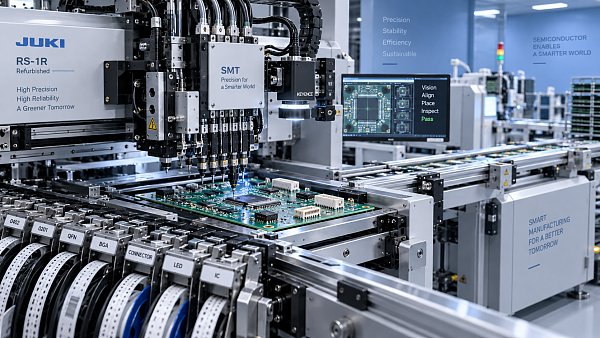
Ask the seller to run a representative sample board using components similar to your production, including small chips, fine-pitch ICs, connectors, and polarity-sensitive devices.
The test program should include multiple component sizes, several feeder locations, repeated placements, vision recognition, rotation corrections, and board transfers through normal operating sequences.
Inspect the assembled board under magnification and, where suitable, use automated optical inspection or measurement tools to identify offset, rotation, skew, and missing placements.
Pay particular attention to components near minimum pitch specifications, because marginal accuracy often becomes visible first on fine-pitch leads, BGAs, QFNs, and miniature chip parts.
Repeat the same placement test more than once rather than accepting a single successful cycle, since intermittent vacuum, vision, feeder, or encoder issues may emerge later.
Compare the observed placement result with the manufacturer’s documented accuracy specification, while recognizing that stated accuracy may require ideal calibration and environmental conditions.
If the machine cannot demonstrate stable results with your key components, a lower purchase price rarely compensates for scrap, rework, missed shipments, and troubleshooting time.
Evaluate Feeders, Nozzles, and Component Handling
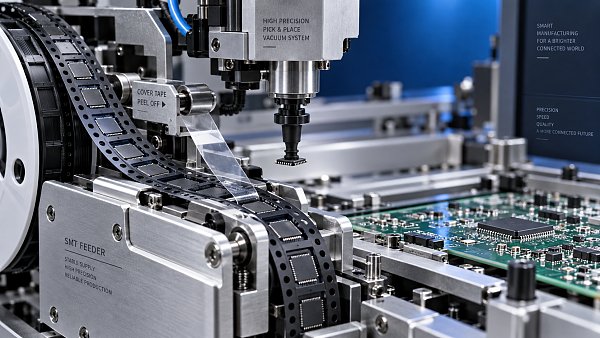
Feeders often determine real productivity more than the base machine, particularly in high-mix operations where setup speed, reliability, and feeder availability directly affect utilization.
Create a feeder inventory listing tape widths, feeder types, quantities, serial numbers, compatibility status, and whether each unit has been functionally tested with material.
Check feeder latches, advancing mechanisms, sensors, tape guides, cover-tape peelers, and electrical connectors for wear, bent parts, inconsistent movement, or contamination.
Ask the seller to demonstrate pickup from several feeder positions, including outer feeder slots, because alignment and communication issues may appear only at specific locations.
Confirm that the included feeders are original, supported units rather than modified alternatives that could reduce placement reliability or complicate future repair and calibration.
Nozzles should be inspected for wear, cracks, blocked vacuum paths, damaged tips, and missing identification, especially when the machine will handle small or delicate components.
Review whether the nozzle library covers your current packages and anticipated future products, including specialized nozzles for connectors, LEDs, large capacitors, or odd shapes.
Vacuum performance must remain consistent during repeated picking cycles, because weak vacuum can create random placement defects that are difficult to diagnose in production.
Check Vision Systems, Sensors, and Calibration Status
Modern placement accuracy depends heavily on cameras, lighting, fiducial recognition, and sensors, so electronics and vision systems deserve the same scrutiny as mechanical components.
Inspect upward-looking and downward-looking cameras for clean lenses, stable focus, consistent lighting, damaged cables, image noise, and reliable recognition across repeated cycles.
Verify that board fiducials, component body recognition, lead inspection, and rotation correction functions operate correctly using components with different sizes, colors, and finishes.
Lighting problems can cause intermittent recognition failures, particularly with reflective metal surfaces, dark packages, transparent tapes, unusual labels, or low-contrast component markings.
Review calibration records for cameras, axes, feeders, and placement heads, then confirm whether calibration procedures can be performed by your staff or local service provider.
Test safety sensors, board-width sensors, rail sensors, vacuum sensors, and feeder presence detection, since failures in these systems can stop production or create handling errors.
Examine the condition of electrical cabinets, cooling fans, filters, power supplies, relays, and connectors for dust buildup, overheating marks, corrosion, or nonstandard repairs.
Where possible, request diagnostic logs and alarm histories, because recurring faults often reveal more about equipment reliability than a short demonstration under seller supervision.
Confirm Software, Licenses, and Data Accessibility
Software condition can determine whether a used SMT placement machine is operationally usable, even when its hardware remains in excellent mechanical condition.
Confirm the installed software version, operating system, license status, machine database, feeder library, nozzle library, and availability of original recovery media.
Ask whether the software can import your CAD, centroid, BOM, or program data formats, and whether it supports the barcode, traceability, and MES functions you need.
Legacy operating systems may create cybersecurity, backup, and compatibility issues, so buyers should understand whether replacement computers or supported upgrade paths are available.
Verify that login credentials, administrator access, license keys, and service passwords can legally transfer with the machine, avoiding dependence on the previous owner.
Run a program creation or editing exercise during inspection, rather than only opening an existing file, to confirm that engineers can maintain products after installation.
Check whether backups can be exported and restored successfully, since production data loss after a computer failure can cause avoidable delays during urgent customer orders.
When software support is limited, budget for documentation, training, backup hardware, and qualified technical assistance before committing to the purchase.
Assess Spares, Service Support, and Total Ownership Cost
The purchase price is only one part of the financial decision, because used equipment value depends on parts availability, service response, training needs, and expected maintenance spending.
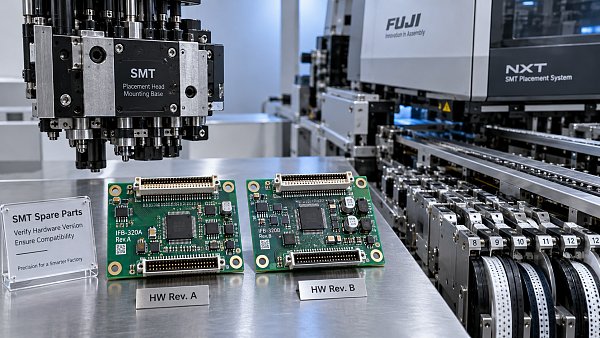
Identify critical spare parts such as motors, encoders, drive cards, cameras, valves, vacuum pumps, sensors, belts, filters, feeder components, and control computers.
Determine whether original machine spare parts are available from authorized channels or reputable suppliers, particularly for components that can stop the entire production line.
Ask for current prices and lead times for critical spares, because an inexpensive machine becomes costly when a single failed board requires months of sourcing effort.
Consider whether your facility has technicians capable of preventive maintenance, mechanical adjustment, calibration, software recovery, and basic fault isolation without external support.
Calculate total ownership cost over several years, including purchase, shipping, installation, utilities, feeders, tooling, refurbishment, training, service contracts, and spare-parts inventory.
Compare that cost with the expected output, labor savings, yield improvement, and capacity flexibility gained from the equipment rather than comparing purchase prices alone.
SMT MALLS can help buyers evaluate equipment packages alongside original spare parts and broader PCB assembly line requirements, improving planning across the full production system.
Use a Clear Acceptance Plan Before Final Payment
Before final payment, define written acceptance criteria covering machine configuration, included accessories, demonstrated functions, placement performance, software transfer, documentation, and delivery responsibilities.
The agreement should state who handles dismantling, packaging, transport, insurance, customs documentation, installation, startup, training, and damage discovered after delivery.
Record the test conditions used during inspection, including board type, component list, program version, feeder setup, production speed, and measured placement results.
Photograph serial numbers, feeder inventories, accessories, cabinet interiors, wear areas, and test boards, creating an objective record of the equipment condition before shipment.
If refurbishment is included, specify exactly which items will be replaced, cleaned, calibrated, tested, or repaired, rather than relying on broad descriptions such as fully serviced.
Buyers should also establish a post-installation qualification plan involving machine leveling, utility checks, calibration, trial boards, process verification, operator training, and maintenance scheduling.
A short warranty can still provide meaningful protection when it clearly defines response time, excluded items, labor coverage, spare-parts responsibility, and evidence required for a claim.
Clear acceptance criteria transform inspection from an informal seller demonstration into a controlled purchasing decision with measurable technical and commercial safeguards.
Conclusion: Make Used Equipment a Controlled Investment
A thorough inspection process for pre-owned SMT placement machines focuses on production fit, mechanical integrity, placement quality, feeder reliability, software access, and long-term support.
The strongest purchasing decision comes from testing the machine with representative products, reviewing documented history, confirming transferability, and calculating lifecycle costs before final commitment.
When these checks are completed carefully, pre-owned equipment can provide dependable capacity expansion without exposing the PCB assembly operation to avoidable yield, downtime, or support risks.


GET A FREE QUOTE
Simply fill in the information to get a free quote! Our professional team customizes photovoltaic solutions for you, provides accurate quotes, and rejects hidden consumption!
