



It often starts the same way: a machine fault appears during a busy production window, the line team asks whether the feeder module can be repaired quickly, and the sourcing side realizes the harder question is not the repair itself but who should handle it. When an NXTR unit is involved, a delay in diagnosis, uncertain spare parts, or vague service communication can quickly turn a routine maintenance issue into a scheduling problem.
That is why choosing an NXTR维修服务商 usually becomes a bigger decision than expected. On paper, several providers may claim they repair the same equipment. In practice, their differences show up in three places that matter most to daily operations: whether they help protect uptime, whether they can support parts needs without guesswork, and whether their response process is fast enough to fit real production pressure. If you are comparing vendors and trying to reduce sourcing risk, it helps to evaluate them the way maintenance problems actually unfold, not the way sales pages describe them.
Start with the situation you are actually trying to prevent
One common mistake is to compare service providers only by quotation format or stated turnaround promises. That sounds efficient at first, but it misses the operational context. The real issue is rarely “Can this supplier repair NXTR equipment?” The more useful question is “When a fault interrupts production, can this supplier help us restore stable operation without creating new uncertainty around parts, repeat failures, or communication gaps?”
Looking at the decision from that angle changes the evaluation process. Instead of treating repair service like a one-time transaction, you begin to assess whether the provider can support maintenance continuity. That means checking technical depth, parts traceability, failure analysis habits, and the discipline of their service coordination. These factors are less visible than a unit price, but they usually matter more after the first urgent repair request arrives.
Uptime is not only about speed
Many buyers naturally focus on turnaround time first. That is understandable, especially when the production team is already asking for an estimate. But uptime is not protected by speed alone. A provider that returns a unit quickly but does not isolate the root fault, verify function under realistic conditions, or document replaced parts may create a second interruption later. From a procurement perspective, that kind of repeat event is expensive even if the initial repair looked fast.
When reviewing a potential provider, ask how they handle the full repair cycle. Do they begin with clear fault intake information? Can they distinguish between symptom-based replacement and component-level troubleshooting? Do they explain what was found, what was changed, and what should be monitored after reinstallation? You are not looking for polished language. You are looking for signs that the repair process is controlled rather than improvised.
Another useful point is whether the provider understands line impact, not just bench repair. Some service teams are technically capable but operate as if every job can wait in a queue. Others understand that production environments need practical communication: initial acknowledgment, estimated inspection timing, parts status updates, and realistic return planning. A strong vendor does not need to promise miracles. They need to show that they can manage repair work in a way that supports production planning.
Parts support is where many evaluations become too shallow
It is easy to assume that if a repair provider accepts the job, parts support will somehow be handled along the way. That assumption causes trouble. For NXTR-related repairs, parts availability and parts authenticity are not side issues. They affect repair reliability, consistency between units, and the ability to maintain equipment over time.
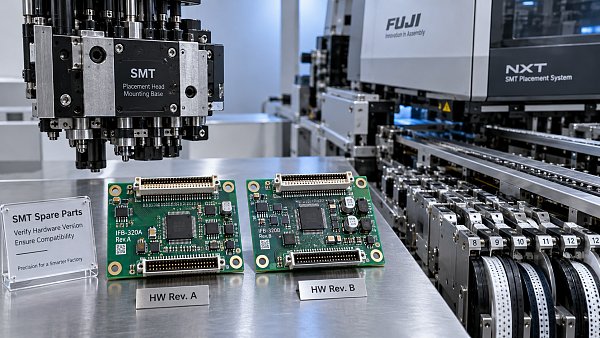
When you assess an NXTR维修服务商, ask where replacement parts come from and how the provider distinguishes between original machine spare parts and other sourcing channels. This is not about rejecting every alternative automatically. It is about knowing what is being installed, whether it matches the service objective, and whether the decision is visible to you before approval. If a provider cannot explain this clearly, the sourcing risk becomes yours.
There is also a practical inventory question. Some repair companies are good at diagnosis but weak in parts coordination. They may identify the failed item correctly, then lose days waiting for procurement. Others can combine repair capability with access to original machine spare parts or broader SMT equipment supply support. That can matter when a repair turns into a replacement decision, or when you need to compare whether fixing the unit is more sensible than securing another part to keep the line moving.
In this area, broad familiarity with SMT/THT assembly equipment can be helpful, not because it solves every NXTR issue directly, but because it usually means the provider is used to dealing with machine compatibility, spare parts handling, and line-level maintenance decisions. If the supplier also works with complete PCB assembly line support, that may improve coordination when the repair decision affects adjacent equipment or spare planning. Still, it is worth confirming that this broader scope actually translates into NXTR-specific service discipline rather than general industry language.
Response speed should be measured by process clarity
Buyers often ask, “How fast can you respond?” That is a fair question, but the answer is easy to make sound better than reality. A provider may reply to an email quickly and still move slowly once the unit is sent in. Another may be less polished in sales communication but much better once the repair is underway. So instead of treating response speed as a single promise, break it into stages.
First, look at intake response. How quickly can the provider confirm receipt of your request, ask for the right fault details, and tell you the next step? A vague “send it over and we’ll see” may be acceptable for low-risk items, but it is not a strong sign for critical equipment support.
Then look at technical response. After receiving the unit, how does the provider communicate inspection status? Do they share whether the issue has been replicated, whether further testing is needed, and whether parts are immediately available? This stage matters because many delays occur not during repair itself but during the silent period between delivery and diagnosis.
Finally, consider escalation response. If the production side needs an urgent decision, can the provider adjust priorities, propose alternatives, or at least tell you honestly what is possible? A reliable service partner is not defined by saying yes to everything. They are defined by handling pressure without disappearing into uncertainty.
A useful comparison method when several suppliers look similar
If you are comparing multiple options, it helps to move beyond general capability statements and test each provider against the same practical questions. Not a formal scorecard for its own sake, but a decision framework grounded in likely operating conditions.
For example, ask each provider to explain their normal process for an NXTR fault from inquiry to return. Listen for specifics: required fault information, inspection flow, repair authorization, parts confirmation, testing approach, and post-repair reporting. A supplier with real process experience will usually answer in a way that sounds operational rather than promotional.
Ask what happens if the inspection finds that repair is not the best path. Can they support replacement parts sourcing? Can they distinguish urgent temporary action from longer-term maintenance planning? For procurement, this matters because the best repair supplier is not always the one who pushes every unit into repair. Sometimes the more useful partner is the one who can help you decide when repair, spare replacement, or broader line support is the safer option.
It is also worth asking how they handle repeat issues. Not because you expect them to guarantee zero recurrence, but because their answer reveals how they think. A strong provider will usually mention inspection records, replaced components, possible environmental or usage factors, and the value of comparing similar faults across equipment. A weak one tends to reduce everything to a simple repair transaction.
Signs that should make you slow down before awarding work
Some warning signs appear early if you know where to look. One is excessive confidence without technical explanation. If a supplier immediately promises quick repair before reviewing symptoms, unit condition, or parts status, that may sound convenient, but it does not necessarily reflect control.
Another is weak documentation. If there is no clear way to identify what was repaired, what parts were replaced, or what testing was performed, it becomes difficult to manage future maintenance decisions. This is especially frustrating when the same type of fault appears again and no one can tell whether it is a new issue or an unresolved previous one.
Be cautious as well when parts language is vague. Terms like “compatible,” “equivalent,” or “same function” may or may not be acceptable depending on your maintenance policy, but they should never appear without explanation. Procurement does not need to become the engineering team, yet it does need enough visibility to avoid approving unknown quality risk.
A final concern is fragmented service scope. If diagnosis, parts sourcing, shipment coordination, and after-service communication all seem to sit with different parties and no one owns the full process, delays become more likely. Even capable technical work can be undermined by poor handoff management.
Where broader equipment support can reduce sourcing friction
In some situations, the provider selection is not only about repairing one failed unit. It is about whether the supplier can fit into a larger maintenance and spare parts workflow. This is where providers that focus on SMT/THT assembly equipment and original machine spare parts may offer a practical advantage. The value is not in making the relationship bigger than necessary; it is in reducing the number of disconnected conversations you need to manage when a repair request intersects with spare planning or line support decisions.
For example, if an NXTR repair request reveals that the real issue may involve additional related components, having access to a supplier familiar with assembly equipment and PCB assembly line support can make next-step coordination easier. That does not replace technical verification, but it can shorten the path from fault discovery to action. For a sourcing team, fewer fragmented handoffs often means less avoidable delay.
Questions worth asking before you commit
Good evaluation questions are usually simple. The difference is whether they force concrete answers.
Ask how the provider verifies the fault, not just how long repair takes.
Ask what kind of parts support they can offer if replacement is required, and whether they can clearly identify original machine spare parts when relevant.
Ask how updates are communicated during inspection and repair, especially when timing changes.
Ask what information you will receive when the unit is returned.
Ask what they need from your side to avoid delays at the beginning.
Ask who owns the case if something is unclear after the unit is reinstalled.
None of these questions are complicated, but together they help expose whether the vendor runs a controlled service process or simply reacts to each job as it comes.
Making the final decision without overcomplicating it
When the choice is close, the safest decision is usually the provider that reduces uncertainty across the whole repair cycle, not the one that looks best on one isolated metric. A fast quote is useful. A low price may matter. A broad product range can help. But for NXTR service support, the better choice is often the company that can explain its repair path clearly, handle parts questions transparently, and communicate in a way that matches production reality.
If you are evaluating an NXTR维修服务商, try to picture the first urgent maintenance event after approval. Will the provider know what information to request? Can they move from intake to diagnosis without confusion? Will parts sourcing become a black box? Will updates come before someone has to chase for them? Those practical questions usually lead to a better decision than comparing marketing claims.
In the end, procurement risk is not reduced by finding a supplier that says yes to everything. It is reduced by choosing one that works in a predictable, technically grounded way when equipment problems become time-sensitive. That is the kind of support that helps protect uptime, keeps parts decisions visible, and makes response speed meaningful rather than just promised.


GET A FREE QUOTE
Simply fill in the information to get a free quote! Our professional team customizes photovoltaic solutions for you, provides accurate quotes, and rejects hidden consumption!
