



Blog
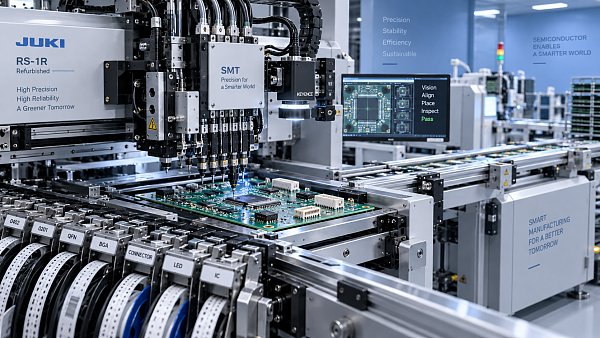
For project managers balancing prototypes, low-volume runs, and scalable production, choosing the right Complete SMT THT Production Line Solutions is critical to maintaining flexibility without sacrificing quality or throughput. The ideal setup combines adaptable SMT placement, reliable THT insertion, inspection, and efficient material handling. The real challenge is not finding machines that can assemble a PCB, but designing a line that can move between very different build profiles without creating excessive downtime, uncontrolled process variation, or an investment burden that only makes sense at full volume.
Mixed-volume production is common in industrial controls, power electronics, medical devices, telecom infrastructure, automotive aftermarket products, and specialist instrumentation. A factory may need to build a few pilot lots of a new controller in the morning, run several hundred boards of an established product in the afternoon, and support engineering changes before the next shipment. In this environment, the conventional assumption that “more automation is always better” often leads to poor line decisions.
The appropriate line is the one that protects delivery commitments and product quality across the expected product mix—not merely the one with the highest nominal output rate.
Mixed-volume builds create a different line-design problem
High-volume PCB assembly lines are normally optimized around repeatability. Product variation is limited, feeder setups remain stable, programming effort is amortized across large quantities, and material replenishment can be planned around predictable consumption. Mixed-volume operations work under different conditions. Changeovers are frequent, component packages vary widely, board sizes may change from one project to another, and THT content can range from a few manually inserted connectors to dense power assemblies requiring selective soldering.
That changes what should be measured. Rated placement speed, conveyor length, or the number of feeder slots matter, but they do not determine whether a line will perform well in day-to-day project execution. More useful questions include:
- How long does it take to move from one validated product to the next?
- Can the line handle engineering revisions without disrupting production control?
- Which processes are genuinely bottlenecks: printing, placement, reflow, THT insertion, soldering, inspection, or test?
- Can material preparation be separated from machine downtime?
- Will operators be able to maintain quality during low-frequency, high-mix work?
- Can prototype and pre-production lots use the same process route as later production?
A line designed only around SMT output can appear efficient until THT assembly, manual touch-up, or inspection begins to accumulate work-in-process. Conversely, an oversized THT automation investment may remain underused if product designs change frequently or annual volumes do not justify dedicated tooling. The best Complete SMT THT Production Line Solutions are therefore modular at the process level, not simply a collection of separate machines.
Start with the production profile, not an equipment list
Before comparing equipment brands or requesting quotations, convert the product portfolio into a practical manufacturing profile. This should cover more than expected monthly volume. A useful assessment includes the number of active part numbers, lot-size distribution, annual new-product introductions, expected engineering change frequency, PCB dimensions, component package range, fine-pitch or bottom-terminated device requirements, double-sided assembly needs, and the proportion of boards requiring THT processes.
It is also important to distinguish between average demand and operational demand. A line may have a modest annual output requirement yet still require rapid response because customer orders are irregular, samples must be delivered quickly, or several projects compete for the same equipment. In that case, setup flexibility and program management may have more value than maximum theoretical capacity.
For planning purposes, three broad production patterns are useful:
Many operations sit between these categories. The purpose is not to classify the business perfectly, but to identify which constraints are likely to dominate over the next three to five years. A line sized for today’s most common board may become a constraint if new products introduce heavier connectors, more thermal-mass variation, larger PCBs, odd-form components, or stricter traceability expectations.
SMT placement should be flexible before it is fast
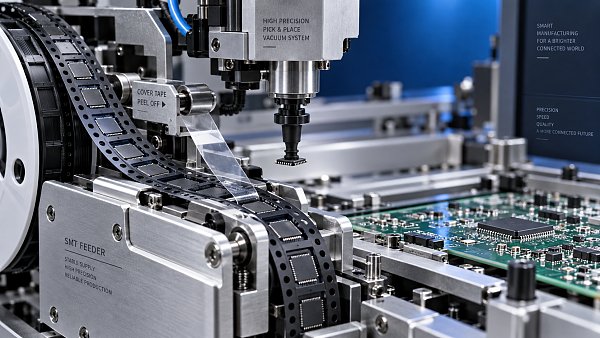
For mixed-volume builds, a flexible SMT platform usually provides more business value than a machine optimized exclusively for high-speed chip placement. The critical capability is coverage: the system should support the intended range of chip components, fine-pitch devices, QFNs, BGAs, connectors, shields, and irregular packages without forcing a separate process route for routine work.
Placement speed still matters, especially when recurring products begin to scale. However, project leads should look beyond quoted components-per-hour figures. Those numbers depend on idealized component mixes and do not reflect feeder changes, board loading, vision recognition, nozzle changes, production interruptions, and operator interaction. The more relevant figure is effective output over a full shift or full week, including changeovers and recovery from normal disruptions.
Several features are particularly relevant:
- Offline feeder preparation: Enables the next job to be staged while the current product is still running.
- Feeder and component verification: Reduces loading errors, which are especially damaging when operators change products frequently.
- Wide package compatibility: Avoids outsourcing or manual placement of components that should remain in the standard line process.
- Reliable board support: Important for thin, large, or depanelized PCBs where placement accuracy can be affected by flexing.
- Program conversion and library management: Determines how quickly engineering data can become a controlled production program.
A dual-machine placement configuration is not automatically required. For many mixed-volume operations, one well-specified flexible placer with sufficient feeder capacity and a controlled staging process performs better than two machines that create balancing complexity. A second placement module becomes justified when the first machine is a proven throughput bottleneck, when high-speed and odd-form placement need different optimization, or when production continuity requires redundancy.
Printing and reflow determine whether flexibility becomes repeatable quality
Mixed-volume programs often underinvest in solder paste printing and reflow profiling because placement equipment receives most of the attention. In practice, these two stages have a major effect on defect rates, engineering response time, and downstream rework.
An automatic stencil printer is usually appropriate when products include fine-pitch components, QFNs, BGAs, or recurring volumes where manual printing introduces inconsistency. Key considerations include board-size range, underside support, automatic stencil alignment, paste inspection options, cleaning capability, and how quickly operators can change stencils and support tooling. For prototype-only work, semi-automatic printing can be viable, but project teams should be realistic about the control burden as products become more complex.
Reflow selection should be based on the thermal demands of the actual assemblies rather than zone count alone. Boards combining small passives with large connectors, heat sinks, metal-backed areas, or high-copper power sections can require carefully managed profiles. The oven needs enough thermal capability and controllability to produce acceptable results across the planned board range. If nitrogen reflow is being considered, it should be tied to a clear requirement such as oxidation-sensitive finishes, specific soldering challenges, or customer process requirements—not adopted as a general symbol of higher quality.
For a mixed-volume line, profile management is as important as oven hardware. Saved and approved profiles, thermocouple-based validation for new boards, controlled recipe changes, and a clear rule for when a profile must be requalified prevent informal adjustments from becoming hidden quality risk.
THT process selection is often the decisive choice
THT is where many otherwise well-designed lines lose predictability. The correct process depends on component density, lead geometry, thermal mass, board access, annual volume, and whether the same product is likely to change frequently.
Manual insertion remains appropriate for many low-volume and high-mix products, particularly where components are varied, awkward to automate, or subject to frequent design changes. Manual work does not inherently mean poor quality; it requires fixtures, clear polarity controls, component kitting, operator training, and inspection discipline. The mistake is treating manual insertion as an uncontrolled fallback after SMT assembly.
Wave soldering is most suitable where THT layouts are compatible with the process and board design follows wave-solderability rules. It can be highly efficient for repeat products with substantial THT content, but mixed SMT/THT boards may require palletization, masking, or design accommodations. These requirements should be assessed early, especially for boards with bottom-side SMT components.
Selective soldering offers a stronger fit for many mixed-volume applications. It can solder individual connectors, terminals, and through-hole devices while avoiding areas that should not contact a solder wave. It is especially useful for complex assemblies, variable THT patterns, and products with a combination of surface-mount and through-hole components. Its limitations are cycle time, programming effort, nozzle maintenance, and the need to validate fluxing and preheating for each assembly family.
For low-volume work, robotic or hand soldering stations may still be the economical choice. The decision should compare the full cost of fixtures, programming, validation, labor consistency, rework exposure, and future demand—not only the purchase cost of wave or selective soldering equipment.
Inspection must match the defect risks of each process
Inspection is not a single box at the end of the line. In mixed-volume manufacturing, it is the mechanism that keeps product variation from becoming quality variation.
Solder paste inspection can be valuable where fine-pitch assemblies, small apertures, or paste-volume sensitivity create a meaningful risk of print-related defects. Automated optical inspection after reflow can detect many placement, polarity, presence, and visible solder-joint issues. It is particularly useful when the product mix is broad and manual visual inspection would depend heavily on individual operator familiarity.
Neither SPI nor AOI can confirm every hidden defect. BGA solder joints, certain bottom-terminated packages, and internal conditions may require X-ray inspection where risk and customer requirements justify it. Functional test and in-circuit test serve a different purpose: they assess electrical behavior rather than assembly appearance. A project plan should define what each inspection stage is expected to catch and avoid assuming that one system replaces all others.
For THT work, inspection criteria need equal attention. Lead protrusion, fill quality, polarity, connector seating, solder bridging, and mechanical alignment can all affect reliability. A controlled visual inspection station, supported by documented accept/reject criteria and appropriate magnification, may be more valuable than adding automation that is poorly matched to product variability.
Material handling and changeover discipline determine actual capacity
In mixed-volume factories, lost time rarely comes from a machine’s cycle time alone. It comes from searching for material, checking partial reels, correcting feeder loading, waiting for a first-off approval, moving boards between isolated stations, or discovering that the next program lacks validated data.
Complete SMT THT Production Line Solutions should therefore include the operational infrastructure around the core equipment. This may involve barcode-based material control, feeder setup verification, dedicated reel storage, kitting areas, board buffers where needed, ESD-controlled workstations, and clear separation between incoming material, prepared kits, work-in-process, and completed assemblies.
Conveyors and automated loaders should be selected carefully. They improve flow when board format and volume justify them, but excessive conveyor automation can make a high-mix line less convenient if every unusual board or manual process requires bypassing the system. A short, accessible line with practical manual loading points can be more productive than a heavily integrated layout that is difficult to reconfigure.
Changeover performance should be measured from the last good board of one job to the first accepted board of the next. This definition includes feeder preparation, stencil changes, program loading, board support adjustment, first-article confirmation, and documentation release. It reveals the true cost of product variety and directs improvement effort to the right places.
Plan the line around validation, service, and expansion
Equipment selection is only one part of implementation. A mixed-volume line needs a commissioning plan that covers utility readiness, ESD controls, compressed-air quality where required, ventilation and fume extraction, operator access, stencil and feeder storage, maintenance clearance, and material-flow routes. Poor layout decisions are expensive to correct after equipment installation.
Acceptance criteria should be defined before delivery. These commonly include board-size capability, component range, placement accuracy requirements, solder-joint acceptance criteria, throughput expectations for representative products, machine interoperability, training scope, spare-parts recommendations, and documentation handover. Running only a simple demonstration board during acceptance provides little assurance that the line will handle the real production mix.
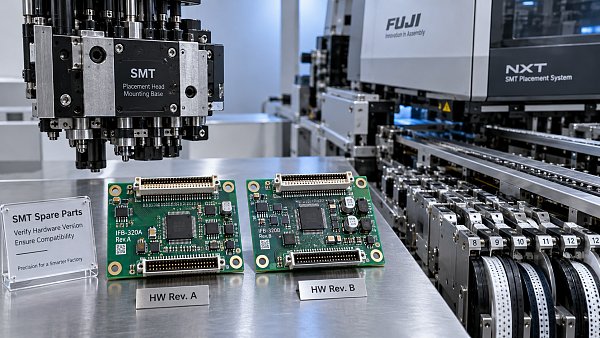
Serviceability also deserves more weight than it often receives. Access to original spare parts, preventive-maintenance procedures, software support, training, and realistic response arrangements can influence uptime more than minor differences in specification. For cross-border projects, teams should confirm electrical standards, import documentation, installation responsibilities, remote-support arrangements, and the availability of critical consumables and wear parts.
Expansion should be planned as a path, not purchased as unused capacity. A practical initial configuration may include a flexible printer, one versatile placement machine, a reflow oven suited to the thermal range, controlled THT insertion stations, selective soldering or wave soldering where justified, and inspection appropriate to product risk. Capacity can then be increased by adding placement modules, more automation in material handling, advanced inspection, or dedicated THT cells once demand and process stability support the investment.
The strongest solution is usually modular, not maximal
For mixed-volume PCB assembly, the most suitable production line is rarely the fastest possible SMT line or the most automated THT cell. It is a balanced process system that can absorb product variation while maintaining controlled soldering, visible quality accountability, manageable changeovers, and a credible route to higher output.
The decision becomes clearer when each equipment choice is tested against real project conditions: the actual board families, the expected rate of change, the quality risks, the availability of process engineering resources, and the cost of delayed deliveries or rework. A line that enables rapid prototypes but cannot support repeatable production is incomplete. A line built for large-scale output but too rigid for engineering change can be equally unsuitable.
When flexibility is treated as an engineered capability—supported by equipment compatibility, process validation, material discipline, inspection strategy, and maintainable operations—Complete SMT THT Production Line Solutions can support both immediate build requirements and a more controlled transition from prototype to scalable production.


GET A FREE QUOTE
Simply fill in the information to get a free quote! Our professional team customizes photovoltaic solutions for you, provides accurate quotes, and rejects hidden consumption!
