



Before leasing an NXTR pick-and-place machine for high-mix SMT lines, verify these 7 integration-critical checks — not just specs
If your line handles more than 30 unique board types per week, switches between 0201 passives and 0.4mm-pitch QFNs daily, and tolerates less than 90 minutes of unplanned downtime per month, leasing an NXTR isn’t about “getting a fast machine.” It’s about avoiding a cascade of hidden constraints that surface only after the first three production runs. Project managers evaluating NXTR贴片机租赁 for high-mix environments consistently underestimate how deeply placement accuracy, feeder architecture, and software handshakes interact under real-world variability—not lab conditions.
1. Placement accuracy isn’t static—it degrades with feeder mix complexity
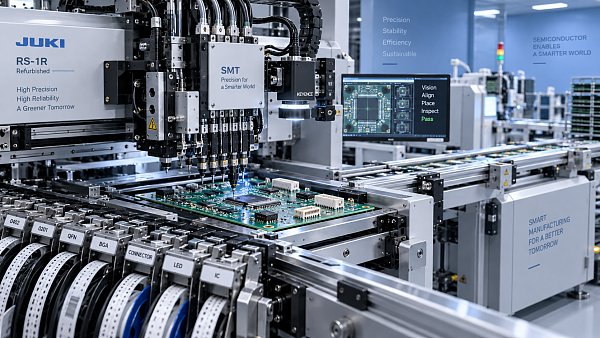
The NXTR’s ±25 µm @ 3σ spec assumes ideal conditions: full trays of identical 0402s, no feeder reconfiguration, ambient temperature stabilized at 23°C ±1°C. In high-mix lines, accuracy shifts when you load 12 different tape widths (8mm to 88mm), mix bulk feeders with vibratory sticks, or run 0.3mm-pitch micro-BGAs alongside 1206 LEDs on the same cycle. The real test isn’t the datasheet number—it’s whether the machine maintains ≤±35 µm Cpk across *all* component types in your actual BOM mix over 48 consecutive hours. Ask lessors for a time-stamped video of a live run matching your top 5 most problematic components—not a staged demo with golden boards.
2. Feeder compatibility is non-negotiable—and often misrepresented
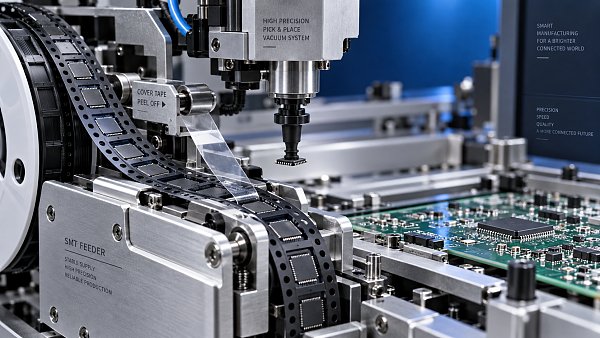
“NXTR supports all Fuji CP feeder types” sounds comprehensive until you discover that “support” means mechanical fit—not electrical handshake, firmware recognition, or auto-calibration. High-mix lines rely on rapid feeder swaps, but many leased NXTR units ship with older firmware (v4.2 or earlier) that fails to auto-detect CP73/CP74 dual-lane feeders or misreads tape pitch on reused reels. Verify firmware version *and* confirm which feeder models are validated for *your specific feeder inventory*. If you use third-party feeders—even certified ones—test them on-site before signing. Firmware updates mid-lease are rarely included and can cost $8,000–$12,000.
3. Software integration must extend beyond the machine interface
Your MES doesn’t care about NXTR’s native software. What matters is whether the leased unit exposes real-time placement data (not just pass/fail logs) via OPC UA or MQTT to your existing traceability system—and whether it accepts dynamic job routing commands from your APS without manual intervention. Many leases include only basic FTP-based job transfer, forcing engineers to manually validate and push programs for every new board revision. That adds 15–22 minutes per changeover. Confirm if the lease includes API access, authentication protocols, and documented latency for command-response cycles under load. If the lessor says “it’s supported,” demand a written list of tested integrations with your exact MES/APS vendor and version.
4. Uptime guarantees mean nothing without defined failure modes
A “95% uptime guarantee” is meaningless unless the contract defines what constitutes downtime. Does it include feeder recalibration? Vision system retraining after lighting changes? Time spent validating a new stencil file? In high-mix settings, 60% of unplanned stops stem from feeder-related faults—not placement errors. Require the lease agreement to specify response SLAs *per fault category*: e.g., ≤2 hours for feeder sensor calibration drift, ≤4 hours for nozzle clog resolution, ≤1 business day for vision model retraining. Also verify whether remote diagnostics count as “resolution”—many lessors log remote sessions as “resolved” even when the root cause requires on-site parts replacement.
5. Spare parts aren’t “included”—they’re gatekept
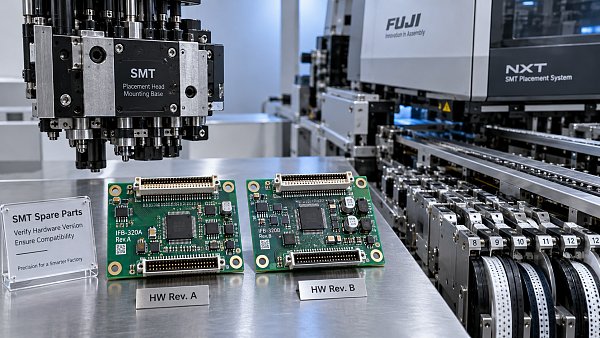
Leased NXTR units rarely include critical consumables like vacuum nozzles, feeder belts, or vision calibration targets. Worse, some lessors restrict access to OEM spare parts unless you pay a premium service fee—even for items you’d normally source directly. Check if your lease permits direct ordering of Fuji part numbers (e.g., A1102137 for 0.1mm nozzles) through authorized distributors. If not, factor in a 30–45% markup on spares and confirm lead times for high-wear items. In one recent case, a project manager discovered only *one* lessor-approved nozzle supplier was authorized for their leased NXTR—and its 14-day lead time caused a 3-shift backlog during a new product ramp.
6. Operator training must cover variability—not just baseline operation
Standard NXTR operator training teaches how to load a program and start a cycle. High-mix demands competence in rapid fault diagnosis: distinguishing a vision misalignment (requires recalibration) from a feeder timing skew (requires mechanical adjustment) from a tape tension error (requires reel rewinding). Ask whether training includes hands-on troubleshooting of your top 3 recurring issues—e.g., skewed QFN placements after feeder swap, inconsistent fiducial detection on flex-rigid boards, or intermittent vacuum loss during high-speed micro-passive placement. If training is delivered remotely or uses generic examples, budget for 2–3 weeks of internal mentoring post-deployment.
7. Lease terms must align with your product lifecycle—not calendar years
Most NXTR leases default to 24- or 36-month terms. But if your product portfolio turns over every 14–18 months—or if your next-generation boards require upgraded vision hardware (e.g., dual-camera inspection)—a fixed-term lease becomes a liability. Confirm whether early termination is permitted for technology obsolescence, and whether you can upgrade core modules (e.g., camera head, feeder controller) mid-lease without renegotiating the entire agreement. Some lessors offer “technology refresh clauses,” but they’re rarely triggered automatically—you’ll need documented evidence of capability gaps affecting yield or throughput.
High-mix SMT isn’t about maximizing speed. It’s about minimizing decision latency—from feeder selection to fault recovery to program validation. An NXTR leased without verifying these seven points may deliver headline specs, but it will expose process fragility where it hurts most: in the gap between engineering intent and shop-floor execution. Focus less on “can it place?” and more on “can it adapt—consistently, predictably, and without escalating support overhead?” That distinction separates a leased asset from a managed constraint.


GET A FREE QUOTE
Simply fill in the information to get a free quote! Our professional team customizes photovoltaic solutions for you, provides accurate quotes, and rejects hidden consumption!
