



A production manager may ask for another placement machine because an order has moved forward, a product mix has changed, or an existing line is already running close to its practical limit. The finance question is different: should the business commit capital to an asset that may be underused once the immediate demand passes?
For a temporary capacity gap, NXTR实装机出租 can be financially stronger than buying a machine outright. Rental is usually the better route when demand is time-bound, product forecasts remain uncertain, the required machine configuration is still being validated, or cash is needed for inventory, labor, tooling, and other operating priorities. Purchase becomes more defensible when the machine will support a stable, long-lived production requirement and the total ownership case remains favorable after utilization, service, depreciation, and residual-value risk are considered.
The decision begins with the duration of the capacity problem
The most important distinction is not whether a placement machine is useful. It is whether the need is temporary capacity, recurring capacity, or permanent base capacity. A machine can be essential to a current schedule while still being the wrong asset to own.
A short-term need often appears in familiar forms: a contract manufacturer receives an urgent build request, a new product is being ramped before demand is proven, a seasonal program compresses production into several months, or another line is unavailable during repair, relocation, or qualification. In these situations, a capital purchase can solve the immediate production issue but create a longer financial obligation after the peak ends.
Before approving either route, separate the demand into three time horizons:
- Temporary surge: Capacity is needed for a defined period, but the expected workload afterward is unclear or lower.
- Transitional requirement: The business expects ongoing work, yet the product mix, volumes, site plan, or machine specification may change.
- Structural demand: The load is expected to remain after the current program, and the machine fits a durable production strategy.
Rental tends to fit the first category and can be useful in the second. Ownership is generally easier to justify only in the third, provided the operation can keep the asset productive enough to support its full cost.
Why purchase price is not the real comparison
Approving a machine based mainly on acquisition price creates an incomplete comparison. The cost of ownership begins before the machine places its first component and continues after the program that triggered the purchase has ended. Finance should compare the total commitment created by ownership with the defined cost of gaining access through rental.
For an outright purchase, the relevant cost is broader than the invoice value. It may include installation work, freight, taxes or import-related costs where applicable, startup support, software options, feeders, nozzles, spare parts, training, maintenance arrangements, insurance, floor preparation, utilities, and the internal time required to commission the machine. Working capital can also be tied up in component inventory needed to keep the added line productive.
Ownership also carries a utilization risk. A placement machine that is highly productive during a two-month rush may become an expensive fixed asset during a quiet period. Its accounting depreciation may continue even when it is idle. There may be resale value, but that value is uncertain and depends on condition, age, configuration, market demand, and the cost of preparing the asset for sale or transfer.
A rental arrangement does not eliminate cost. It shifts the decision toward a known or more bounded operating expense for an agreed access period. The finance advantage is not that rental is automatically cheaper. It is that the company avoids committing to costs and asset risks that do not match an uncertain requirement.
Capacity should be measured at the line level, not from a machine brochure
A placement machine can appear to provide enough output when judged by published placement speed alone, while the actual line remains constrained elsewhere. Financial approval based on theoretical throughput can lead to spending on capacity that does not convert into shippable boards.
The useful question is: what is the current bottleneck, and how much finished-board capacity will an additional machine release? The answer depends on more than placements per hour. It includes changeover time, feeder preparation, component availability, program optimization, board handling, printer and inspection capacity, rework load, operator availability, and the time needed to maintain the machine.
For example, a line producing multiple high-mix assemblies may lose more productive time to setup and material replenishment than to placement speed. Adding a machine may help, but it may not resolve the real loss unless feeder planning, kitting, and offline setup are also addressed. Conversely, a stable, high-volume board with a placement bottleneck can make additional placement capacity immediately meaningful.
Finance does not need to perform detailed process engineering, but approval should rely on an operational estimate that identifies:
- the required additional output by week or month;
- the existing constraint and evidence that placement is the limiting step;
- the expected product mix and placement complexity;
- planned uptime, changeovers, and maintenance allowance;
- the equipment and labor needed around the rented machine;
- what happens to the machine once the peak requirement ends.
This prevents a common mistake: treating extra machine capacity as identical to extra production capacity. The distinction matters because the financial case depends on output that can actually be shipped and invoiced, not on nominal equipment capability.
Rental is particularly useful when the specification is still a moving target
A temporary requirement often comes with incomplete technical certainty. The board design may still be changing, component packages may not yet be fully settled, feeder quantities may be underestimated, or the factory may be deciding whether to run the product on an existing line, a dedicated cell, or a different site. Buying before these questions are resolved can lock the business into a configuration that is not ideal once the program stabilizes.
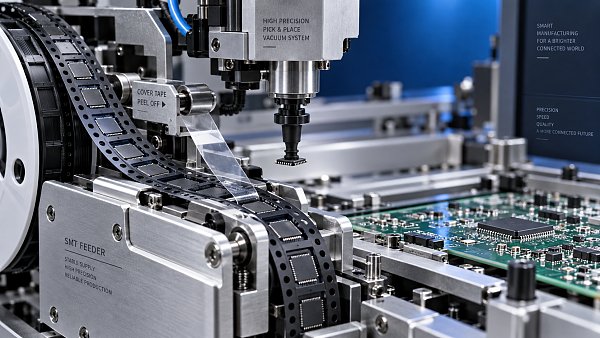
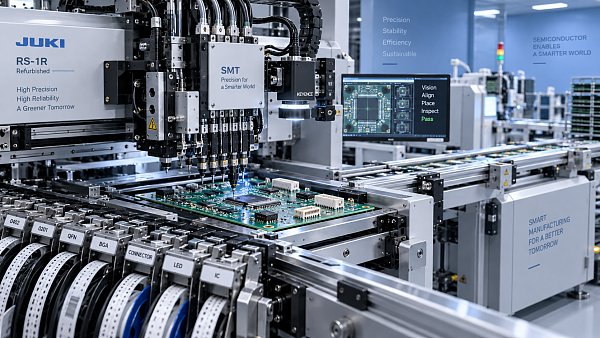
Using an NXTR placement machine through a rental period can create time to validate the operating model. The focus should not be a vague “trial” but specific questions that affect the eventual ownership decision. Can the required feeder arrangement support the planned mix? Does the machine integrate with the current material flow? Are program preparation and changeovers compatible with the schedule? Can downstream inspection and handling equipment absorb the added output? What spare-parts coverage and service response are needed to protect the production plan?
The answers are valuable because they reduce the risk of purchasing the wrong asset, the wrong quantity of supporting equipment, or too much capacity. They may also show that a different intervention—better scheduling, feeder standardization, a second shift, process balancing, or repair of an existing machine—addresses the constraint at lower cost.
Build the financial comparison around commitment, not just monthly expense
A practical approval model does not require false precision. It needs transparent assumptions and a clear comparison period. Start with the period during which the capacity is genuinely required. Then estimate the cost and exposure under each option for that same period.
For rental, include the agreed rental charge, transport, installation or commissioning requirements, any applicable setup costs, insurance responsibilities, operator or technical support needs, consumables or tooling not included, and costs associated with extension if the program runs longer than expected. Confirm what is included in maintenance support and what response arrangements apply if the machine becomes unavailable.
For purchase, include the acquisition price and all costs necessary to place the machine into productive use. Then consider financing cost or the opportunity cost of capital, expected maintenance, support arrangements, required feeders and accessories, and the estimated asset value at the end of the comparison period. The residual value should be treated cautiously, not used as a convenient number that makes ownership look cheaper.
The comparison should also recognize flexibility. A rental arrangement may cost more per month than owning an asset on paper, yet still be the lower-risk financial decision because it limits the company’s downside if demand falls, a program is delayed, or the production plan changes. That flexibility has value when uncertainty is material.
Questions that make the model more reliable
- Is the added capacity required for a committed production plan or only a forecast?
- How many months of realistic utilization are needed before ownership becomes preferable?
- Would a delay in equipment availability cause overtime, subcontracting, late delivery, or lost production opportunities?
- Is the organization capable of supporting the machine internally, or will external service be needed?
- Can the equipment be redeployed to another product or site if this program ends early?
- Which costs are fixed regardless of utilization, and which stop when the rental period ends?
These questions move the discussion away from “rent versus buy” as a procurement preference. They frame it as a decision about capital exposure, schedule risk, operational readiness, and the cost of being wrong.
Contract terms can change the economics
The equipment arrangement itself deserves close review. A short rental period with uncertain extension terms may be less useful than a slightly longer arrangement with predictable options. Likewise, a low quoted rental rate may exclude items that are essential to production, such as feeders, installation support, maintenance coverage, or defined response procedures.
Review the practical terms before treating the proposal as comparable with a purchase quote. The questions should cover machine condition and configuration, feeder and nozzle availability, software and programming requirements, delivery lead time, installation responsibilities, acceptance criteria, maintenance scope, replacement options in the event of failure, return condition, extension process, and liability allocation. The operational team should confirm that the proposed machine configuration fits the board mix rather than assuming all placement machines provide equivalent capability.
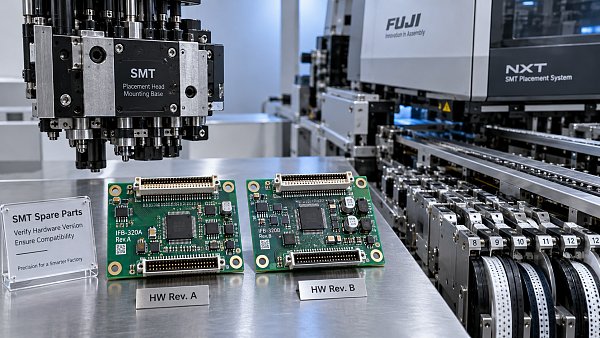
Original machine spare parts can also affect risk planning. If production depends on a temporary machine during a compressed schedule, the organization should understand which wear items or critical spares are available, who supplies them, and whether there is a defined path for urgent replacement. A rental decision is strongest when the service and spare-parts assumptions are explicit rather than left to be resolved after installation.
When purchase is the better answer
Rental should not be treated as a default response to every capacity request. Purchase may be the sounder decision when the capacity gap reflects a permanent shift in demand, the machine will operate at a sustainable utilization level, and the factory has a credible long-term deployment plan. It can also be appropriate when the organization already has the supporting infrastructure, trained personnel, compatible feeders, and maintenance capability needed to absorb another machine without substantial additional cost.
The key is that the business case should survive a conservative view of demand. If approval depends on every forecasted order arriving on time, every shift staying fully loaded, and the machine retaining an optimistic resale value, the purchase case is fragile. If the asset remains useful even under a lower but plausible workload, ownership becomes more defensible.
A good approval memo can therefore present rental as a bridge rather than an alternative that must be rejected or accepted forever. The business can secure capacity for the immediate need, collect real operating information, and define the trigger for a later capital request. That trigger might be sustained utilization over an agreed planning period, a confirmed multi-program workload, or proof that the machine resolves the identified line constraint.
A disciplined way to approve short-term capacity
When urgent production demand is driving the request, speed matters, but speed should not remove the decision framework. Ask operations to define the capacity shortfall, the duration, and the expected constraints around the machine. Ask procurement to clarify the full rental scope and the availability of necessary feeders, service, and original spare parts. Then compare the fixed commitment of ownership with the bounded cost of temporary access.
If the requirement is short-lived or uncertain, rental protects cash flow and avoids turning a temporary production issue into a long-term asset-utilization problem. If demand proves durable and the technical configuration is validated, the organization can revisit ownership with better evidence than it had at the start of the ramp.


GET A FREE QUOTE
Simply fill in the information to get a free quote! Our professional team customizes photovoltaic solutions for you, provides accurate quotes, and rejects hidden consumption!
