Blog
Sourcing reliable FUJI NXT spare parts is absolutely crucial for maintaining peak efficiency in your semiconductor assembly line. When a surface mount technology (SMT) machine goes down, the cost is measured not just in the price of the replacement component, but in the lost production volume and delayed time-to-market. At SMT MALLS, we simplify this critical process by providing 100% genuine components with verified part numbers, ensuring seamless machine compatibility and rigorous quality testing before shipment. Discover how to confidently select, verify, and purchase the right original spare parts to minimize costly downtime, extend equipment lifespan, and optimize your overall PCB assembly operations.
Decoding and Verifying FUJI NXT Part Numbers
The foundation of any successful spare parts purchase is the part number. However, simply copying a number from a previous purchase order or a printed manual is often where mistakes begin. FUJI NXT part numbers are highly specific, and even a minor discrepancy can lead to receiving a component that looks identical but functions differently.
The Anatomy of a Part Number
A FUJI part number is not just a random string of digits; it encodes specific information about the component's design, revision, and intended application. For mechanical parts like nozzles or feeder components, the part number dictates physical dimensions, material tolerances, and surface treatments. For electronic assemblies, such as servo drivers or control boards, the part number also implies the firmware version, electrical specifications, and communication protocols.
A common pitfall is ignoring the suffix or revision code at the end of the part number. Two components might share the same base number but have different revision suffixes. While they might physically fit into the machine slot, the internal circuitry or microcode could be incompatible with your machine's current operating system, leading to communication errors or unrecognized hardware alerts on the HMI (Human-Machine Interface).
Extracting the Exact Part Number from the Machine
Do not rely solely on physical labels, which can fade, get replaced, or be misread. The most reliable way to verify the correct part number is to extract it directly from the machine's software. Modern FUJI NXT systems allow maintenance engineers to view the exact part numbers and revision levels of installed modules, feeders, and heads through the maintenance menu.
When requesting a quote, always cross-reference the part number read from the machine's HMI with the supplier's catalog. If a supplier suggests a "compatible alternative" with a slightly different part number, demand a detailed technical explanation of the differences before proceeding. Genuine replacements should match the original part number exactly, unless an official engineering change notice (ECN) has superseded it.
Navigating Compatibility: Beyond Physical Fit
In the SMT industry, compatibility is frequently misunderstood as mere physical fit. If a component slides into the slot and the connectors align, many assume it is compatible. This is a dangerous assumption that can lead to severe production issues, including increased throw rates, placement errors, or even mechanical collisions.
Mechanical vs. Firmware Compatibility
Physical compatibility ensures the part can be mounted. Firmware and software compatibility ensure the part can communicate with the machine's central controller. The FUJI NXT series is highly modular, allowing for various configurations of work heads, feeders, and conveyors.
Consider the feeders. A newer generation of FUJI feeders might physically connect to an older NXT base module, but if the machine's main software does not support the communication protocol of that specific feeder generation, the machine will not be able to control it. Similarly, replacing a work head requires ensuring that the head's internal calibration data and firmware are fully supported by the machine's current software version. The physical pins might connect perfectly, but without the correct firmware handshake, the head will not operate.
The Impact of Machine Software Versions
Before ordering any electronic spare part, you must know the exact software version running on your FUJI NXT machine. Some replacement boards or drives are shipped with a baseline firmware that requires a specific machine software version to initialize. If your machine is running an older software build, installing a new replacement board might trigger a version mismatch error.
In such cases, the solution is not always to replace the board. It might require updating the machine's main software first, or requesting a replacement board pre-flashed with an older, compatible firmware. This is why seamless machine compatibility requires the supplier to understand not just the hardware, but the software ecosystem of the equipment.
Component-Specific Verification and Testing
Different types of spare parts require entirely different verification and testing methodologies. Treating all components with a one-size-fits-all approach is a recipe for failure.
Nozzles and Work Heads
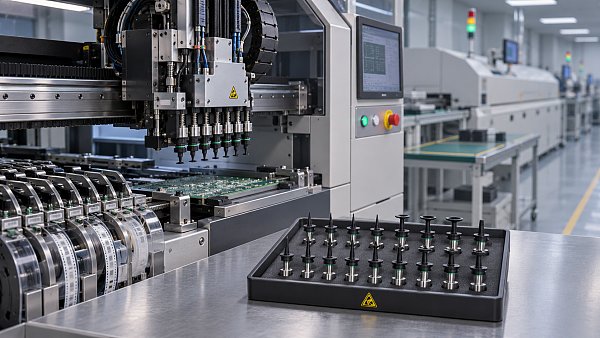
For nozzles, the verification is highly precise. The internal vacuum channels must be completely clear, and the external dimensions must be within microns of the original specification. A slightly worn nozzle tip might still pick up a component, but it will cause micro-misalignments during placement, leading to tombstoning or bridging defects later in the reflow process. Work heads require dynamic runout testing to ensure the Z-axis and R-axis motors are operating within specified tolerances without introducing vibration.
Feeders
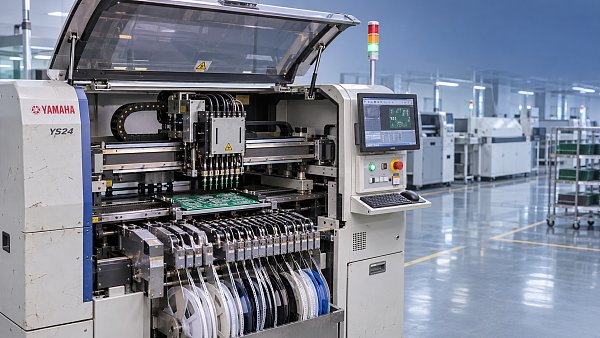
Feeders are complex electromechanical devices. Visual inspection is insufficient. A refurbished feeder might look clean on the outside, but if the internal gears are worn, the tension springs are fatigued, or the cover mechanism is sticky, it will cause inconsistent component pickup. Functional testing for feeders must involve running the feeder at high speeds on a test bench to verify the pitch accuracy, the smoothness of the advance mechanism, and the reliability of the sensor feedback.
Electronic Assemblies
Electronic spare parts, such as servo amplifiers, power supplies, and main control boards, require rigorous functional testing. Visual inspection cannot reveal degraded capacitors, failing voltage regulators, or intermittent solder joints. Professional testing involves placing the component on a specialized test bench that simulates actual operating conditions. For a servo driver, this means testing its ability to deliver precise current under varying load conditions, not just checking if it powers on. For control boards, it involves verifying all input/output signals, communication ports, and memory functions under thermal stress.
Choosing the Right Supplier to Minimize Risk
The process of verifying part numbers, ensuring compatibility, and testing components is time-consuming and requires specialized equipment. This is why the choice of supplier is just as important as the part itself. When evaluating a supplier for FUJI NXT spare parts, look beyond the price tag.
Traceability and Authenticity
A reliable supplier must provide clear traceability for original machine spare parts. They should be able to explain the source of the components and guarantee that they are 100% genuine. The prevalence of high-quality counterfeits in the SMT market means that without strict supply chain control, you might unknowingly purchase fake components that fail prematurely or damage the machine. Suppliers who cannot verify the origin of their parts should be avoided, regardless of how attractive their pricing might be.
Technical Support and Application Knowledge
Suppliers who only act as middlemen will simply forward your part number request to a warehouse. True partners, however, will ask clarifying questions. They will ask for your machine's serial number, current software version, and the specific error code you are trying to resolve. This level of engagement ensures that the part they ship will actually solve your problem.
SMT MALLS focuses heavily on SMT/THT assembly equipment, original machine spare parts, and complete PCB assembly line solutions. This comprehensive focus means our technical team understands the broader context of your production line. When you need a specific NXT spare part, we can verify the part number against your exact machine configuration, ensuring seamless machine compatibility and providing the necessary testing documentation to give you confidence in the replacement. Rigorous quality testing before shipment is a standard practice, ensuring every component meets original performance specifications.
Building a Proactive Spare Parts Strategy
Waiting for a machine to break down before searching for spare parts is a reactive approach that inevitably leads to extended downtime. A proactive strategy involves identifying critical components that are prone to wear or have long lead times, and keeping them in your local inventory.
When building this critical spare parts inventory, apply the same rigorous standards for part number verification and compatibility checking as you would for an emergency purchase. Ensure that stored electronic boards are kept in anti-static, climate-controlled environments to prevent degradation before they are even needed. Mechanical parts should be stored properly to prevent dust accumulation or physical deformation.
Ultimately, purchasing FUJI NXT spare parts is not just a transactional task; it is a critical maintenance operation. By paying close attention to part number accuracy, understanding the nuances of software and mechanical compatibility, and demanding rigorous pre-shipment testing, you protect your production line from unnecessary risks. Partnering with a dedicated supplier who prioritizes genuine components and thorough testing ensures that your SMT operations remain efficient, reliable, and profitable.



GET A FREE QUOTE
Simply fill in the information to get a free quote! Our professional team customizes photovoltaic solutions for you, provides accurate quotes, and rejects hidden consumption!