
Blog
Buying a used SMT machine can make a PCB assembly expansion more affordable, but the lowest purchase price does not always deliver the best value. A machine that looks clean on the factory floor may still have worn placement heads, missing feeders, unsupported software or a history of unresolved faults. Any of these issues can turn an attractive deal into a source of downtime.
The right decision starts with your production requirements and ends with evidence: a meaningful inspection, a live demonstration and clear documentation of what is included. Whether you are replacing a single pick-and-place machine or building a complete line, the checks below will help you compare used equipment with greater confidence.
Start with the boards you need to build
Before evaluating a machine, define the work it must handle. A high-speed chip shooter may be useful for boards dominated by passive components, while a flexible placement machine may be a better fit for mixed component sizes and frequent changeovers. Some lines use both; others need one machine that balances speed and versatility.
Review your current products as well as likely near-term requirements. Pay particular attention to:
- Board dimensions and handling: Check minimum and maximum PCB sizes, thickness limits, conveyor direction, edge clearance and any support needed for thin or irregular boards.
- Component range: Confirm compatibility with your smallest passives, fine-pitch devices, BGAs, odd-form parts and tall or heavy components.
- Production mix: Consider batch sizes, product changeover frequency and the number of different components used on a typical board.
- Line position: Establish whether the machine must operate independently or communicate with upstream and downstream equipment.
Ask the seller to verify capabilities against the exact configuration being offered, not just the model brochure. Options such as placement heads, cameras and feeders can change what an individual machine can actually produce.
Inspect the physical condition beyond the covers
A visual inspection is a starting point, not a substitute for a functional test. Look for signs of fluid leaks, corrosion, impact damage, loose wiring and improvised repairs. Excessive dust or neglected lubrication may point to poor housekeeping, although a freshly cleaned machine is not proof of good maintenance.
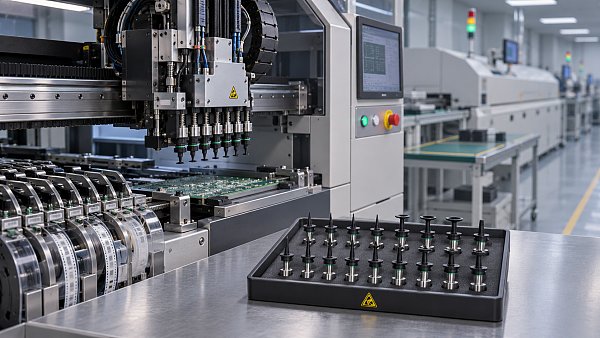
Ask to inspect the moving assemblies: rails, belts, ball screws, linear guides and cable carriers. Listen for unusual noise as the axes move, and look for vibration, hesitation or inconsistent motion. On a pick-and-place machine, examine placement heads, nozzle holders, cameras, vacuum lines and sensors. Worn or damaged parts in these areas can affect both reliability and placement quality.
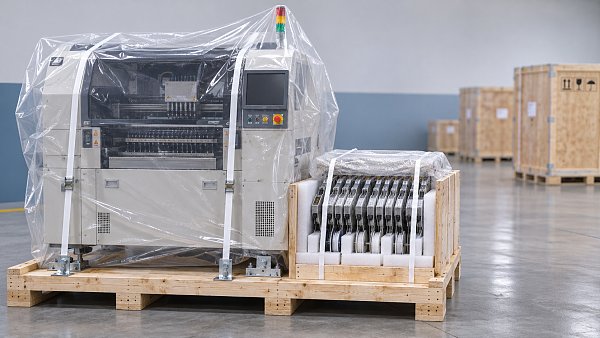
Check the PCB transport system too. Conveyor belts, board stops, clamps and support mechanisms should move smoothly and hold the board securely. If the machine has been stored for a long time, ask how it was protected and whether it has been powered and tested since storage. Seals, batteries and lubricants may need attention even when the machine has seen little recent use.
Can the seller demonstrate real placement performance?
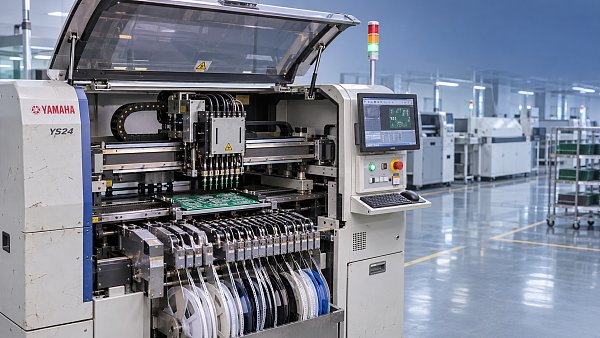
A machine that powers on and moves is not necessarily ready for production. Request a live demonstration using components and boards that are representative of your application. If a visit is impractical, a remote demonstration can be useful, but agree in advance on what will be shown and what evidence you will receive.
During the test, observe board loading, component pickup, vision recognition, placement and board unloading. Watch for repeated pickup failures, rejected components, unexpected stops and alarms that require operator intervention. A short cycle with only easy-to-handle components may not reveal problems relevant to your product.
For critical work, agree on an acceptance method before the test. This might include inspecting placed boards under magnification or using suitable inspection equipment, then reviewing placement offsets, rotation and consistency across the board. Define the components, inspection method and acceptable results in writing. Placement accuracy claims in a specification sheet are useful for screening, but they do not establish the present condition of a particular used machine.
Also distinguish between advertised speed and practical throughput. Published placement rates may be measured under favorable conditions. Your actual output will depend on the component mix, feeder layout, inspection routines, board handling and changeovers. Ask the seller to explain the conditions behind any performance figures and, where possible, observe a representative program.
Maintenance history matters more than age alone
Two machines of the same model and age can be very different purchases. One may have received regular calibration and preventive maintenance; the other may have been run hard until faults became frequent. Request the available service records and review them alongside the machine’s operating hours or cycle counts, if those figures can be verified.
Useful records include preventive maintenance schedules, calibration reports, replaced parts, fault logs and details of major repairs. Ask who performed the work and when. Repeated repairs to the same subsystem deserve a closer look: they may indicate an underlying issue rather than an isolated failure.
Missing records do not automatically make a machine unsuitable, especially when equipment has changed owners. They do, however, increase uncertainty. In that case, consider a more thorough independent inspection and budget for baseline maintenance and calibration before production.
Check feeders, nozzles and other included equipment
Buyers sometimes compare machine prices without comparing what comes with them. A seemingly inexpensive placement machine may need additional feeders, nozzles or support tooling before it can run the intended products. The cost and lead time of those items can substantially change the decision.
Request an itemized list of included accessories, with part numbers and quantities where possible. Check feeder type, tape width, pitch compatibility and condition against your component packaging. If trays, sticks or other formats are used, confirm that the required feeding options are included or available separately.
Inspect a sample of feeders during the demonstration rather than assuming every unit in the package works. Confirm that nozzles match the placement heads and component range, and ask about board support pins, changeover carts, spare filters, manuals and programming accessories. Treat anything not listed in the purchase agreement as excluded until the seller confirms otherwise.
Software compatibility can make or break the purchase
A mechanically sound SMT machine can still be difficult to integrate if its software is obsolete, locked or incompatible with your workflow. Ask for the controller and software versions, available operating modes and any restrictions on programming or data transfer. Confirm that the seller can provide the licenses and access rights needed for lawful operation after ownership changes.
Discuss how programs are created and transferred. Can your team use its existing CAD or centroid data, and what conversion or preparation is required? Are programming tools included, or are they subject to separate licensing? If the machine needs network access, involve your IT team in reviewing the operating system, connectivity and security implications.
For an automated line, verify communication interfaces with the adjacent conveyor, printer, inspection equipment or other machines. An interface standard is a useful starting point, but connectors, signals and operating behavior should be checked on both sides. Do not assume that two machines will communicate correctly simply because both are described as line-compatible.
Investigate spare parts and technical support
Even a well-maintained machine will eventually need consumables and replacement parts. Before committing, identify the components most likely to affect availability: nozzles, belts, filters, sensors, cameras, drives and control boards, depending on the model. Ask whether original machine spare parts are still obtainable and whether suitable alternatives are available when original parts are discontinued.
Availability is only part of the picture. Find out who can diagnose faults, perform calibration and support installation in your location. If your maintenance team is expected to handle repairs, check whether service documentation and training are accessible. A machine with limited local support may still be viable, but the risk and response plan should be understood before purchase.
SMT MALLS focuses on SMT and THT assembly equipment, original machine spare parts and complete PCB assembly line solutions. When assessing used equipment, that combination of machine, parts and line-level considerations is relevant: a purchase should fit not only the immediate process, but also the maintenance and integration work that follows.
Calculate the cost of getting the machine into production
The purchase price is only one part of the investment. Build a comparison that includes the work needed to make each candidate production-ready. Depending on the machine and your site, that may involve:
- Transportation, export or import arrangements, insurance and unloading.
- Electrical supply, compressed air, floor space and any required utilities.
- Installation, commissioning, calibration and operator training.
- Additional feeders, nozzles, tooling, software licenses and spare parts.
- Preventive maintenance, repairs and the time needed for process qualification.
Request written quotations for the major unknowns rather than relying on assumptions. Also compare the likely impact of a delayed installation or an unavailable part. A higher-priced machine with the right accessories and documented condition may be less expensive to deploy than a cheaper unit with an uncertain scope.
Put the inspection findings into the purchase agreement
Once a machine passes the technical review, make sure the commercial terms reflect what you have agreed. Identify the machine by model and serial number, and attach the accessory list, software details and any known defects. Specify which party is responsible for packing, transport, installation and commissioning.
If a test or acceptance procedure is part of the deal, define when and where it will happen, what will be measured and what happens if the machine does not meet the agreed criteria. Review any warranty carefully: check its duration, covered parts, exclusions, claim process and whether shipping or labor is included. Avoid treating a general statement such as “working condition” as a substitute for documented expectations.
Questions worth asking before you commit
- Can the machine handle our actual PCB sizes and full component range with its current configuration?
- Can we see a representative production program run and inspect the resulting boards?
- Which maintenance, calibration and repair records are available?
- Exactly which feeders, nozzles, software licenses and support items are included?
- Are the necessary parts and technical support available for the expected operating life?
- What are the acceptance criteria, delivery responsibilities and warranty exclusions?
A used SMT machine does not need to be the newest model to be a sound purchase. It needs to suit the boards you build, perform consistently in a relevant test and come with a realistic plan for parts, support and integration. Taking time to verify those details before signing can prevent a bargain from becoming an expensive interruption to your production line.



GET A FREE QUOTE
Simply fill in the information to get a free quote! Our professional team customizes photovoltaic solutions for you, provides accurate quotes, and rejects hidden consumption!