Blog
A new PCB assembly line can look complete on an equipment list and still fall short on the factory floor. Placement capacity may exceed the printing process, inspection may create queues, or a replacement part may not match the installed machine revision. These gaps affect output, commissioning time, and purchasing decisions—exactly the issues worth bringing to a focused conversation at NEPCON ASIA.
With 138 SMT machines sold in 2026, SMT MALLS is ready to meet electronics manufacturers planning their next equipment investment. The discussion can start with a new line, an existing production bottleneck, or an original machine spare-parts requirement. Bring the production constraints behind the purchase, not just a machine name, so the meeting can move toward a defined technical scope rather than a general quotation.
Turn the NEPCON ASIA meeting into a working discussion
An exhibition conversation is more useful when it answers one specific production question. “We need more capacity” leaves too many possibilities open. “Our placement section cannot meet the required output when this product mix runs” gives the discussion a measurable starting point.
Before meeting SMT MALLS, identify the decision you need to make. It might be whether to add a placement machine, replace an unreliable unit, expand through-hole assembly, or plan a complete PCB assembly line. These are different purchasing tasks, even when they begin with the same concern about delivery capacity.
A compact production brief should include:
- Product requirements: board dimensions, panel configuration, component range, assembly sides, and any difficult packages or connectors.
- Output expectations: required finished boards per shift, available production hours, and typical batch sizes.
- Current constraints: observed downtime, process queues, changeover losses, quality issues, or maintenance difficulties.
- Project boundaries: available floor space, utilities, budget range, installation window, and equipment that must remain in use.
Confidential product details do not need to be shared without an agreed basis. An anonymized component summary, simplified layout, and production targets can support an initial discussion. Detailed feasibility checks may require more complete engineering information later.
Starting a new PCB assembly line: define the process before selecting machines
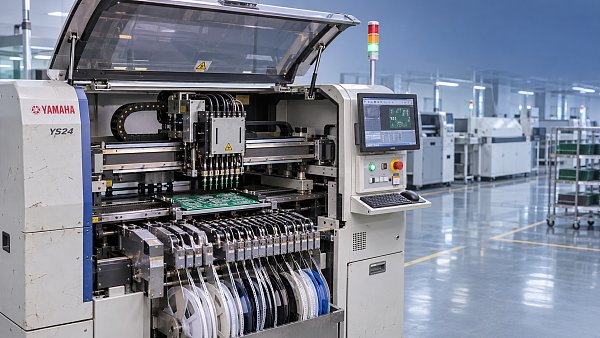
A new-line purchase often begins with the most visible equipment: the placement machine. That is understandable, but placement performance alone does not establish line output. Printing, board handling, reflow, inspection, and any downstream assembly steps must support the same production requirement.
For a useful NEPCON ASIA discussion, describe the route a board must follow from loading through inspection and completion. Include processes outside the SMT section where relevant. A board that requires through-hole insertion and soldering is not finished when it leaves the reflow oven.
Translate production demand into an achievable line target
Separate required output from advertised equipment speed. Published placement rates depend on specified operating conditions and do not directly represent finished-board throughput. Component mix, feeder arrangement, board handling, vision requirements, and changeovers all influence the result.
Provide placements per board, the expected mix of components, and the planned production schedule. Also distinguish steady production from frequent product changes. A line suited to long, repeatable runs may need a different setup strategy from one handling small batches with frequent feeder and program changes.
Ask which assumptions are being used in any capacity estimate. A useful proposal should make clear whether the estimate allows for setup, planned maintenance, inspection, and other expected production losses. Without those assumptions, two equipment proposals may appear comparable while describing different operating conditions.
Confirm the interfaces that can delay installation
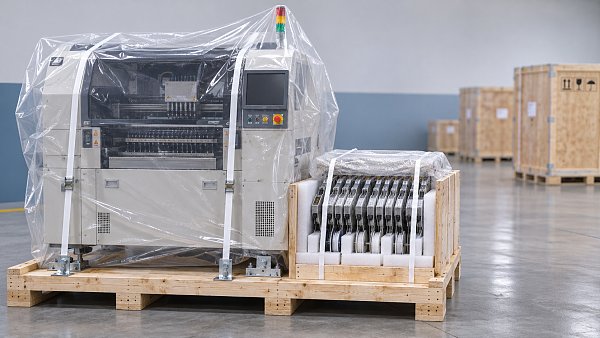
Board transport direction, conveyor height, supported board dimensions, and communication interfaces need checking across the proposed line. Facility requirements also matter: electrical supply, compressed air, exhaust, access for installation, and maintenance clearance should be reviewed before the layout is treated as final.
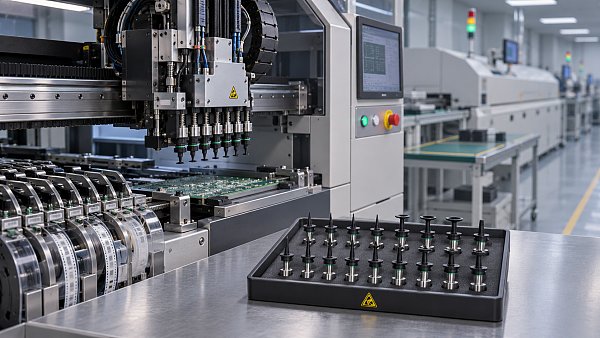
For semiconductor-containing assemblies, component handling requirements may affect the process configuration. Fine-pitch packages, moisture-sensitive devices, and electrostatic-discharge controls should be identified early where applicable. Do not assume that a general equipment description establishes suitability for every package or process.
Upgrading an existing line: locate the loss before buying capacity
When orders increase, adding another machine can seem like the fastest response. Yet low output may come from interruptions rather than insufficient nominal speed. Repeated feeder alarms, lengthy changeovers, inconsistent printing, or waiting for downstream inspection can keep capable equipment underused.
Bring observations from actual production to the meeting. Record where boards wait, which equipment repeatedly stops, and whether the constraint changes between products. A short production record with stoppage reasons is more useful than an overall statement that the line is slow.
The purpose is not to complete a full factory study at the exhibition. It is to distinguish an equipment-capacity problem from a reliability, setup, or process-balance problem. That distinction determines whether the next step should be a machine evaluation, a spare-parts investigation, or a wider line review.
Retained equipment deserves particular attention during an upgrade. Confirm that the proposed addition can handle the existing board range and communicate with adjacent machines as required. Also check whether operators and maintenance personnel will need different tooling, software access, or training.
Sourcing original spare parts without relying on appearance
A spare-parts discussion can be precise and productive, provided the installed machine is identified correctly. Similar-looking assemblies may differ by machine generation, electrical specification, firmware compatibility, or mechanical revision. A photograph alone rarely establishes a reliable match.
For an original machine spare-parts inquiry, prepare the manufacturer, machine model, serial number, and the part number shown on the existing component. Include clear photographs of labels and connectors where appropriate. If a part has been superseded, ask for confirmation of the replacement relationship and any installation conditions.
Describe the fault as well as the requested item. An alarm associated with a motor, sensor, or feeder does not automatically prove that component has failed. Wiring, contamination, adjustment, power supply, and mechanical resistance can produce related symptoms. Replacing the named part without checking the failure mechanism may leave the interruption unresolved.
Keep diagnosis separate from availability. First confirm the identity and suitability of the part; then discuss availability, delivery expectations, documentation, and return conditions. Where a substitution or revision change is proposed, request written compatibility confirmation before ordering.
Safety-related components and work inside electrical or moving assemblies require the applicable machine procedures and qualified personnel. An exhibition discussion can clarify the information needed, but it does not replace equipment-specific maintenance instructions.
Include THT requirements before treating the line as complete
Through-hole components can determine the practical output of an otherwise capable SMT line. Connectors, larger components, or mechanically loaded parts may introduce insertion and soldering operations that need separate equipment, fixtures, handling, and inspection arrangements.
Bring the through-hole component count, board construction details relevant to soldering, and the intended process route. Explain whether the current constraint is insertion labor, soldering consistency, access around components, or work waiting between operations. These conditions lead to different equipment discussions.
Board support and component access also need review. The presence of surface-mount components on the underside, thermal demands, and areas that must be protected can affect process feasibility. Equipment selection should follow that review rather than an assumption that every board can use the same soldering method.
For a complete PCB assembly line inquiry, define where the proposed scope ends. Board loading, SMT assembly, THT operations, inspection, testing, and unloading are separate responsibilities unless explicitly included. A clear scope helps prevent gaps between what the factory expects and what a quotation actually covers.
Compare proposals using the same production basis
After NEPCON ASIA, equipment quotations may be difficult to compare because the listed configurations differ. One may include feeders and tooling; another may leave them as separate items. Installation, software options, transport, training, and acceptance support can also change the purchasing scope.
Ask for a configuration list rather than relying on a model name. Relevant details include the supported component and board range, included accessories, required options, software scope, utility requirements, and equipment condition where applicable. Any capability essential to your product should be confirmed for the quoted configuration.
Acceptance criteria should be discussed before the purchase is finalized. Define what will be checked, which representative boards or files are required, and how outstanding issues will be recorded. Depending on the project, checks may address board transport, component handling, process performance, documentation, and integration with adjacent equipment.
Keep commercial and technical questions connected. A lower initial quotation may exclude items necessary for production, while a larger configuration may contain capacity or options the application does not need. The useful comparison is the cost and scope of equipment ready for the agreed task—not the headline machine price alone.
Agree on a concrete next step at NEPCON ASIA
The 138-machine sales milestone provides a reason to connect, but your production requirements should set the agenda. SMT MALLS focuses on SMT/THT assembly equipment, original machine spare parts, and complete PCB assembly line solutions. Use the meeting to establish which of those areas matches the problem you need to resolve.
Before ending the discussion, agree on the information still missing and the next deliverable. For a new line, that might be a preliminary configuration based on a defined product mix. For an upgrade, it could be a compatibility review supported by cycle-time records. For spare parts, it should begin with confirmed machine and part identification.
Meeting arrangements, exhibition location details, and equipment availability should be confirmed directly before the visit. Bring the relevant records in an accessible format, with sensitive information removed where necessary. A focused technical brief gives the conversation a practical endpoint: a clearly scoped follow-up, with assumptions and open questions recorded before an investment decision is made.



GET A FREE QUOTE
Simply fill in the information to get a free quote! Our professional team customizes photovoltaic solutions for you, provides accurate quotes, and rejects hidden consumption!