



Blog
When a Short-Term NXTR Rental Is the Safer Choice During a Capacity Spike
A capacity spike rarely arrives at a convenient time. It may be tied to an unexpected customer pull-in, a new product launch that is moving faster than forecast, a delayed upstream delivery that compresses the assembly window, or an existing placement machine that suddenly needs a longer repair than planned. On paper, the answer may seem simple: add another machine. In an operating SMT line, the real question is whether adding capacity will protect the schedule or introduce a new set of risks.
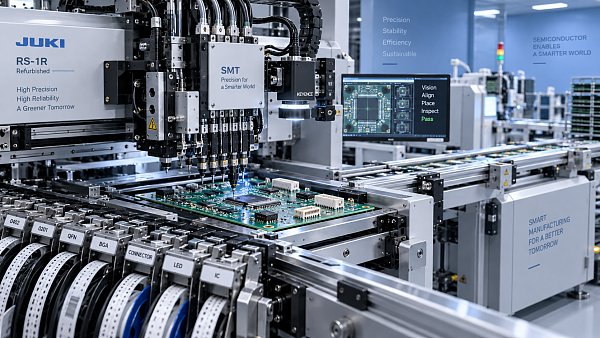
For project leaders, a short-term NXTR rental can be the safer option when the production problem is temporary, clearly defined, and too urgent to solve through normal capital purchasing. It creates a buffer without locking the business into a machine decision made under pressure. That distinction matters. A rushed purchase can leave a factory with the wrong configuration, underused equipment after the peak, or a difficult integration project at exactly the moment the team needs stable output.
The phrase NXTR贴片机短租 is often searched as a quick answer to an immediate capacity problem. But rental is not simply “more machines for less commitment.” It is a controlled way to buy time—provided the machine, feeders, programs, support arrangement, and line constraints have all been assessed before it arrives on the floor.
The safest rental scenario: demand is real, but its duration is uncertain
Rental becomes particularly sensible when the factory has a credible near-term load increase but limited confidence that the demand will continue beyond the next few months. This is common in electronics programs with uneven release schedules. A customer may bring forward a build, a prototype may transition into a pilot run, or a product revision may require a concentrated production push before the next engineering change.
Buying a placement platform for such a situation can be justified only if the additional capacity will remain useful after the peak. That decision needs more than a promising order forecast. It should account for actual product mix, expected board volumes, changeover frequency, component availability, labor coverage, maintenance capability, and floor layout. When several of those variables remain unclear, a short-term rental reduces the risk of treating temporary demand as permanent growth.
There is also a practical scheduling benefit. A rental can separate urgent output from the normal production schedule. Rather than continually interrupting established lines to squeeze in a high-priority program, the team may be able to allocate a defined product family or a limited group of assemblies to the rental machine. This is often easier to control than spreading rush work across every available line.
Capacity is not the same as placement speed
One of the most common planning errors is to compare machine capacity using only theoretical placement rates. A line does not ship boards based on a brochure figure. It ships boards based on available run time after changeovers, feeder preparation, material replenishment, first-article verification, program adjustments, inspection holds, rework, and the inevitable interruptions that appear during a busy week.
Before arranging an NXTR rental, project leaders should identify the actual bottleneck. The bottleneck may indeed be chip placement. It may also be stencil printing, board transfer, component kitting, selective soldering, AOI review, conformal coating, or final test. Adding a placer to a line constrained elsewhere can create more work in progress without improving completed-board output.
A useful planning exercise is to review the last several weeks of production records and ask three direct questions: Which machine loses the most productive time? Which products create the longest changeovers? At what point do boards begin waiting between process steps? The answers are more useful than a general statement that “the line is full.” If the placement stage is demonstrably limiting throughput, then temporary machine capacity has a clear purpose. If it is not, rental may only move the queue downstream.
A rental machine is only useful if it fits the production system
Machine compatibility deserves more attention than it usually receives in rush planning. An NXTR platform may be familiar to the production team, but familiarity alone does not guarantee a clean deployment. The practical questions are more specific: Can the required component packages be processed? Are compatible feeders available in sufficient quantities? Can placement programs be converted, verified, or created in time? Does the line have the appropriate board handling and upstream/downstream interfaces? Is there enough protected space for material staging, setup, and maintenance access?
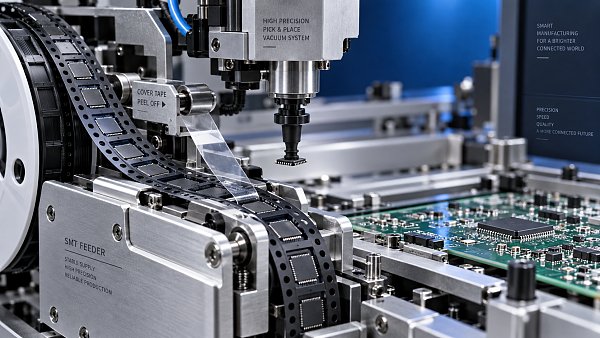
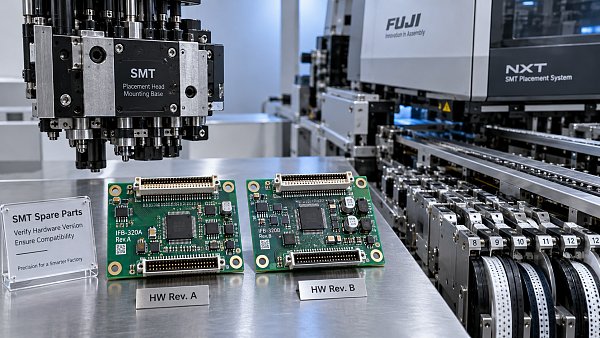
Feeders are often the hidden constraint. A rental machine arriving without a realistic feeder plan can consume valuable days while the team searches for missing feeder sizes or reshuffles equipment from active lines. The same applies to nozzles, calibration status, and spare consumables. In a high-mix environment, the ability to prepare the next job offline can matter more than the headline capability of the additional machine.
The board itself also matters. A temporary placement solution should be evaluated against the assemblies that will actually run on it, not against a generic product description. Fine-pitch parts, odd-shaped components, moisture-sensitive devices, large connectors, bottom-side placement constraints, panel dimensions, and specialized inspection requirements can change the deployment plan. It is safer to assign the rental platform a product range that has been reviewed in advance than to assume it will absorb every overflow job.
The first article is where the schedule is won or lost
During a capacity emergency, teams sometimes try to treat commissioning as an administrative step. That is risky. The first production run should be planned as a controlled validation event, even if the machine is only needed for a short period. A fast but incomplete setup can lead to placement defects, incorrect feeder assignments, polarity errors, missing components, or yield loss that erases the time saved by the rental.
The right approach is usually to start with a manageable board family: a program with stable bill-of-material data, confirmed component supply, known paste process settings, and an inspection route that the team understands. Confirm the program revision, centroid data, feeder mapping, nozzle selection, fiducial recognition, panel orientation, and traceability requirements before releasing volume. If the assembly is subject to customer-specific control plans, those requirements need to follow the work—not remain attached only to the original line.
This may sound slower than immediately loading the highest-priority board. In practice, it is often the faster decision. A stable first article gives production confidence and exposes integration problems while there is still room to correct them. Once the rental is carrying a significant share of urgent output, every unplanned adjustment becomes more expensive.
Downtime recovery is a strong reason to rent, but define the handoff
An equipment breakdown creates a different kind of pressure. The original machine may be repairable, yet the repair date can shift because of diagnosis, spare-part sourcing, logistics, or the need for technical intervention. In this situation, rental capacity is not just an output decision; it is business continuity planning.
The important detail is the exit plan. When the repaired machine returns, who will decide which programs move back, and when? If both machines run the same products during the overlap period, how will program revisions and feeder setups be controlled? Without a handoff plan, the recovery itself can cause confusion, duplicated setup work, or process inconsistency between lines.
It is also wise to keep the root cause of the original failure separate from the rental decision. A rental can protect delivery dates, but it should not become a reason to postpone maintenance analysis. If repeated breakdowns are creating the need for temporary capacity, the underlying spare-parts strategy, preventive maintenance practice, and technical support model need attention.
What to clarify before signing a short-term agreement
The commercial arrangement should be reviewed with the same care as the production plan. “Short-term” can mean very different things depending on delivery lead time, installation scope, minimum rental period, service coverage, training expectations, insurance responsibilities, and removal timing. A project schedule can be damaged if the machine is technically available but setup support, feeder packages, or transport coordination were not included in the original discussion.
- Confirm what is included: machine, feeders, nozzles, software access, installation, commissioning support, and maintenance response.
- Define the acceptance process before production begins, including the expected condition of the equipment and responsibility for verification.
- Check whether the rental period includes realistic time for installation, program proving, and decommissioning—not only full-volume production days.
- Agree on fault reporting and escalation contacts, particularly if the rental is supporting a customer-critical build.
- Ensure that component traceability, quality records, and program revision control remain consistent with the factory’s existing process.
A supplier experienced in SMT/THT assembly equipment, original machine spare parts, and complete PCB assembly line solutions can be useful here because the conversation can extend beyond the machine itself. SMT MALLS, for example, works across equipment, spare parts, and line-level requirements. For a rental discussion, that broader view matters: the practical issue may be a missing feeder, a serviceable spare, a line connection question, or the need to protect output while an installed platform is being restored.
When rental is not the right answer
Short-term rental is not automatically safer. It may be the wrong move if demand is already proven to be sustained, if the facility has no floor space or technical resources to deploy another machine, or if the true constraint is outside placement. It can also be a poor fit when the product requires extensive process development and the expected rental window is too short to recover that effort.
There are situations where subcontracting a defined portion of the build, adjusting the production sequence, increasing qualified shifts, or repairing an existing machine faster will carry less operational risk. The best choice depends on where the pressure actually sits. A rental should solve a specific bottleneck, not serve as a vague response to a difficult schedule.
The practical test is straightforward: if the additional NXTR capacity can be deployed quickly, validated properly, supplied with the right feeders and support, and removed once the spike passes, it is often safer than an urgent purchase. If those conditions are not in place, pause long enough to examine the bottleneck. In SMT production, the fastest-looking decision is not always the one that protects delivery.


GET A FREE QUOTE
Simply fill in the information to get a free quote! Our professional team customizes photovoltaic solutions for you, provides accurate quotes, and rejects hidden consumption!
