



Blog
NXTR Emergency Rental: Keeping SMT Lines Running During Equipment Failure
An unexpected failure on an NXTR placement platform rarely stays contained to one machine. In a semiconductor component manufacturing environment, a stopped placement process can quickly affect feeder preparation, material control, SPI and AOI scheduling, reflow loading, final inspection, and outbound commitments. The immediate issue may be a fault alarm, a damaged module, a feeder-related interruption, or a machine waiting for a replacement part. The project-level problem is larger: lost capacity, uncertain recovery timing, and a production plan that becomes less reliable with every passing shift.
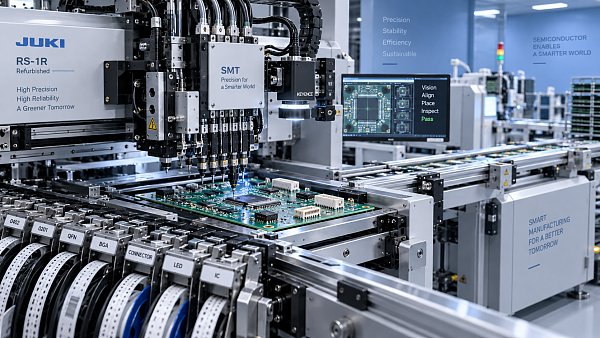
That is where NXTR停线应急租赁—emergency NXTR rental support during a line stoppage—becomes a practical contingency tool rather than a simple equipment transaction. A rental machine or temporary capacity solution cannot solve every failure. It can, however, provide a bridge when repair lead time, parts availability, or new-equipment procurement does not match the urgency of the production schedule.
For project managers, the central question is not simply, “Can we rent a machine?” It is, “Can temporary equipment restore usable output without creating a second problem in programming, materials, quality control, or line balance?” The difference matters. A machine delivered quickly but not aligned with the existing process may only move the bottleneck downstream.
A Line Stop Is Usually a Capacity Problem Before It Becomes a Repair Problem
Maintenance teams naturally begin with fault isolation: identify the failed assembly, verify the alarm history, inspect mechanical condition, and determine whether an original spare part can return the machine to service. That work is necessary. But project leadership should run a parallel assessment from the first hour of the incident.
The relevant planning questions are more operational:
- Which products are scheduled on the affected line during the repair window?
- Can those products run on another line without changing approved process conditions?
- Is the failed machine the actual bottleneck, or will printing, inspection, reflow, or manual handling become limiting once placement capacity is restored?
- Which feeders, nozzles, programs, and material packages must be available for a rental machine to become productive?
- What is the quality verification path after the temporary setup is introduced?
This is why emergency rental decisions should not wait until a repair estimate becomes uncomfortable. Once an outage threatens a committed build, the team should evaluate repair, internal capacity transfer, subcontracting, and rental in parallel. Waiting for a final repair answer can consume the very time needed to prepare a rental solution properly.
In high-mix environments, the pressure is especially sharp. It may be technically possible to move work to another line, yet the alternative line can already be committed to a different component package, feeder setup, or validated production sequence. Moving the work then introduces changeover loss and verification work that may be more disruptive than the original breakdown.
When Emergency Rental Makes Sense—and When It Does Not
Emergency equipment rental is most useful when the production requirement is real, the outage duration is uncertain or extended, and the affected workload cannot be absorbed safely elsewhere. It is also valuable when the business needs to preserve delivery flexibility while the root cause of the failure is still being investigated.
It is less compelling when the fault can be resolved quickly with a confirmed, locally available part and qualified service support. It may also be the wrong answer if the factory has sufficient proven spare capacity on another compatible line. In those cases, transferring the job can be faster than receiving, installing, qualifying, and programming temporary equipment.
The important point is that rental should be measured against the cost of unavailable capacity, not against the purchase price of a machine. A short-term solution may be justified even if it is not the lowest apparent cost, particularly when a missed production window could disrupt material releases, downstream assembly, or customer delivery sequencing. That calculation is specific to each project and should be made with operations, engineering, supply chain, and finance looking at the same timeline.
Compatibility Decides Whether a Rental Machine Is Useful
The phrase “compatible NXTR machine” can hide a great deal of risk. Similar equipment generations or outwardly similar configurations do not automatically mean a rental unit can take over production with minimal effort. Before committing, the engineering team should review the actual production requirement rather than relying on a general equipment description.
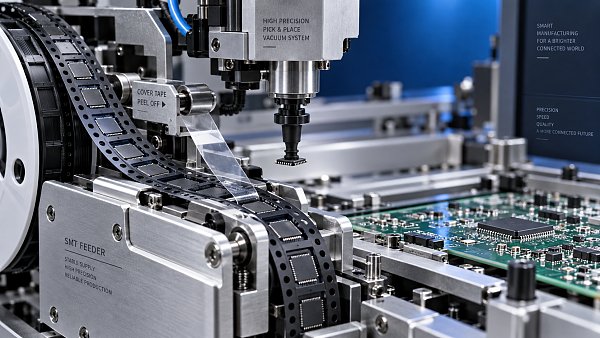
Start with the existing configuration: placement heads, feeder interfaces, nozzle availability, board size requirements, software and program transfer conditions, and the interfaces that affect the wider line. If the rental machine will be placed within an existing SMT flow, conveyor height, board transfer direction, communication arrangements, and physical installation space also need confirmation. A machine that cannot be integrated cleanly can create an avoidable delay at the moment the factory needs speed.
Then examine the product. Semiconductor component boards often include a mixture of fine-pitch packages, small passive components, connectors, shields, or components with handling sensitivities. The question is not whether the rental platform can place “electronic components” in general. It is whether it can support the packages, tolerances, component presentation, and quality expectations of the current build.
A sensible emergency plan includes a limited production verification before full release. That may involve first-article inspection, placement confirmation, SPI review where relevant, and AOI monitoring of the first production panels. The exact validation scope should follow the factory’s established controls and the risk profile of the product. Skipping this stage to recover output quickly can lead to rework or containment later, which defeats the purpose of the rental.
What a Good Emergency Response Looks Like in Practice
The strongest response is coordinated, not merely fast. Equipment support, process engineering, production planning, and materials management need to work from a shared recovery plan. In practice, several activities should happen at the same time: the failed machine is diagnosed; original spare-part availability is checked; rental configuration is reviewed; the factory confirms power, air, floor space, and line interfaces; and the production team identifies the first job to run when capacity returns.
One frequent mistake is treating transportation as the final step. It is not. Delivery only solves the logistics portion of the problem. The real recovery sequence includes installation, configuration confirmation, feeder and nozzle preparation, program readiness, material staging, trial build, inspection review, and controlled ramp-up. If those tasks are not assigned before the rental equipment arrives, the line may remain idle while people search for accessories, programs, or approval ownership.
Another mistake is to separate the rental decision from the repair decision too early. The temporary machine should usually be part of a broader recovery path. If repair is completed sooner than expected, the team needs a plan for transferring work back without unnecessary disruption. If the repair expands in scope, the rental period and support requirements may need adjustment. Keeping both tracks visible gives the project manager more options.
Why Original Spares Still Matter During a Rental Event
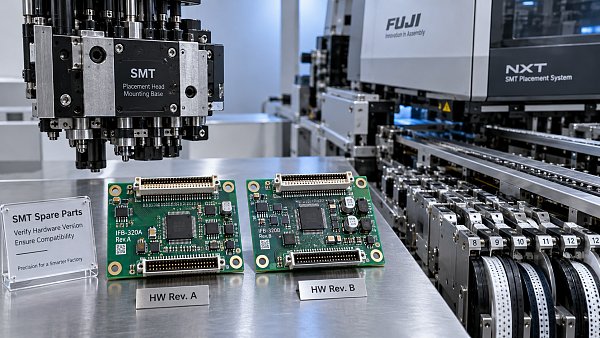
A rental machine protects output; it does not remove the need to restore the failed asset correctly. For that reason, emergency rental and original machine spare-part support are closely connected. The repair team still needs to identify the failed item, confirm the correct part specification, and avoid introducing uncertainty through an unsuitable replacement.
This is particularly relevant when the failed equipment will return to a line supporting qualified or tightly controlled products. A short-term workaround may keep production moving, but the permanent repair must remain traceable to the machine’s required configuration and maintenance approach. Project teams should therefore ask for clarity on spare-part identification, availability, repair scope, and the expected checks before the machine returns to production.
SMT MALLS supports SMT and THT assembly equipment, original machine spare parts, and complete PCB assembly line solutions. In an emergency, that broader scope is useful because the conversation does not have to stop at “a machine is down.” It can cover temporary equipment availability, the parts required for restoration, and the practical interfaces around the affected PCB assembly line. The final arrangement should still be based on the site’s actual equipment configuration and production needs.
Build the Rental Checklist Before the Next Failure
The best time to define an NXTR emergency rental path is before a line is stopped. This does not mean committing to equipment that may never be needed. It means documenting the information that is difficult to collect under pressure: machine configuration, accepted product groups, critical feeder and nozzle requirements, utility details, floor layout constraints, program ownership, and the people authorized to release a trial build.
It is also worth identifying the threshold that triggers escalation. Some factories wait until a stoppage has already affected multiple shifts. Others activate contingency review when a critical fault has no confirmed repair time. Neither approach is universally correct, but the threshold should be deliberate. If everyone has a different definition of “serious downtime,” valuable hours disappear in internal debate.
For project managers, a concise readiness file is often more valuable than a lengthy crisis procedure. Keep current machine details, production priorities, key contacts, and the minimum qualification steps in one accessible place. When an NXTR failure occurs, the team can make a capacity decision based on facts rather than assumptions.
Emergency rental is not a substitute for preventive maintenance, spare-part planning, or disciplined process control. It is a controlled fallback when those safeguards are not enough to prevent a disruption. Used with realistic compatibility checks and a clear ramp-up plan, NXTR停线应急租赁 can turn a potentially open-ended outage into a managed recovery period—and keep critical SMT work moving while the permanent repair is completed.


GET A FREE QUOTE
Simply fill in the information to get a free quote! Our professional team customizes photovoltaic solutions for you, provides accurate quotes, and rejects hidden consumption!
